Views: 0 Author: Shanghai Marya R&D Team Publish Time: 2026-09-08 Origin: Site
A cleanroom is a specialized environment engineered to maintain extremely low levels of airborne particulates, such as dust, microbes, and aerosolized contaminants. These controlled spaces are essential for protecting sensitive products, research processes, or personnel from contamination. Industries like pharmaceuticals, electronics, and biotechnology depend on them to uphold rigorous safety and quality standards.
The global cleanroom technology market reached USD 7.7 billion in 2024, underscoring their growing significance across sectors. You might encounter a cleanroom in a vaccine manufacturing facility, a semiconductor fabrication plant, or a hospital compounding pharmacy. Each adheres to strict air purity classifications. Understanding the cleanrooms used for critical applications helps clarify their vital role in modern manufacturing, healthcare, and cutting-edge research.
Table of Contents
Cleanrooms manage tiny particles in the air to keep products, people, and research safe.
HEPA and ULPA filters take out at least 99.97% of particles, which keeps the air very clean.
ISO classes (1-9) set how clean a room must be; ISO 5 is often used for filling sterile drugs.
Medicine, electronics, and hospitals use cleanrooms to keep things safe and high-quality.
Following the right gowning and cleaning steps is key to keeping cleanrooms up to standard.
Cleanrooms help make more good products and keep patients and workers safe from germs and dirt.
Modular cleanrooms can be set up quickly and adjusted easily, which helps industries that are expanding.
Smart sensors and energy-saving designs help cleanrooms use less power and cost less to run.
A cleanroom is a controlled environment that keeps very low levels of airborne particles, microbes, and vapors. You manage these contaminants to protect sensitive products, research work, or people. The main goal of any cleanroom is contamination control. Dust, skin flakes, and tiny organisms can spoil a medicine batch or ruin a microchip. Cleanrooms stop these dangers before they can cause harm.
Cleanrooms reach their mandatory level of cleanliness using two main methods: filtration and airflow control. You cannot just wipe surfaces and expect a cleanroom to work. The air itself must meet strict purity standards.
High-Efficiency Particulate Air (HEPA) filters are the core of cleanroom air treatment. These filters catch nearly all particles that pass through them. Industry rules require HEPA filters to remove at least 99.97% of particles at 0.3 microns. Some facilities use Ultra-Low Penetration Air (ULPA) filters, which work even better. ULPA filters trap 99.999% of particles at smaller sizes. You push air through these filters nonstop to keep the needed purity level.
Standard | Minimum Efficiency |
|---|---|
0.3 micron test | 99.97% of particles ≥0.3 µm |
MPPS test | 99.95% of Most Penetrating Particle Size (typically 0.1–0.2 µm) |
Airflow design matters just as much as filtration. Laminar airflow moves air in straight, parallel lines at a steady speed. This pattern pushes particles away from key areas in one direction. Turbulent airflow dilutes contaminants by mixing clean air with room air. You pick between these patterns based on your needs. Laminar flow fits ISO Class 5 or cleaner spaces. Turbulent flow works for less strict classes.
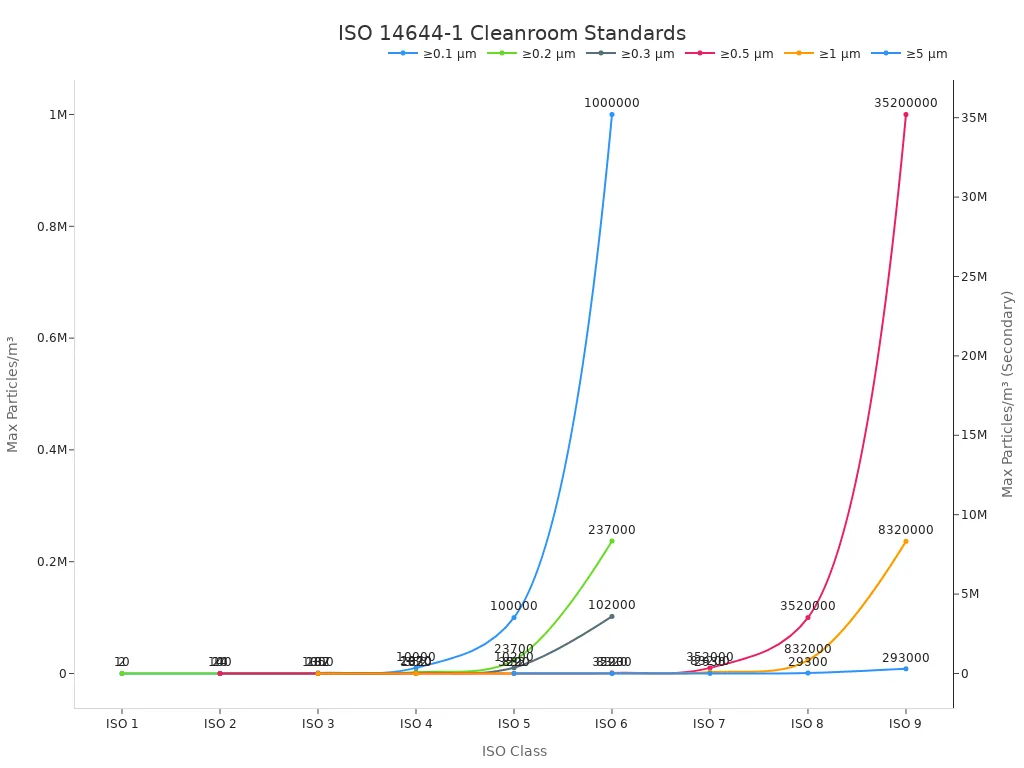
You need a standard way to measure cleanliness. The ISO 14644-1 standard gives that system. It defines nine classes, from ISO 1 (cleanest) to ISO 9 (least clean). Each class sets the maximum number of particles allowed per cubic meter at different particle sizes.
ISO Class | Max particles/m³ at ≥0.1 µm | Max particles/m³ at ≥0.5 µm | Max particles/m³ at ≥5 µm |
|---|---|---|---|
ISO 1 | 10 | - | - |
ISO 3 | 1,000 | 35 | - |
ISO 5 | 100,000 | 3,520 | 29 |
ISO 7 | - | 352,000 | 2,930 |
ISO 8 | - | 3,520,000 | 29,300 |
Note: '-' indicates that the standard does not specify a limit for that particle size at that class.
An ISO 5 cleanroom allows only 3,520 particles at 0.5 microns per cubic meter. A normal office holds millions of such particles. You can see the huge difference. Semiconductor making often needs ISO 4 or cleaner. Sterile drug filling usually runs at ISO 5.
Many fields depend on cleanrooms for their daily work. The cleanroom industries landscape covers pharmaceuticals, biotechnology, electronics, healthcare, food processing, and aerospace. Each sector uses these spaces differently but shares the same goal of stopping contamination.
Based on end user, the pharmaceutical industry accounts for the largest share in the cleanroom technologies market, driven by stringent regulatory requirements for contamination control and product quality, increasing demand for sterile drugs, and the manufacture of biologics and advanced therapies.
The pharmaceutical industry alone holds a 31.90% market share in 2025. Biotechnology follows as the second-largest segment. You will find cleanrooms in vaccine production facilities, semiconductor fabs, hospital pharmacies, and satellite assembly plants. Each application demands specific cleanliness levels and operational protocols. The following sections explore these cleanrooms used for various applications in greater detail.
A cleanroom works well only if it is built right. Every surface, joint, and airflow path can help or hurt your fight against contamination. You need materials that do not shed particles and layouts that stop air from sitting still. The design choices you make decide how easy it is to keep the needed cleanliness level.
Your cleanroom design must handle three main risks: particles being made, particles building up, and particles moving around. Each part plays a role in this defense system.
Pick materials that do not shed particles for all surfaces. Stainless steel, high-density polyethylene, and seamless epoxy flooring with coved corners resist particle creation and remove gaps where contaminants can hide. These materials also handle repeated cleaning with strong chemicals.
Air showers work as a first defense. You walk into a closed chamber where fast, HEPA-filtered air jets blow loose particles off your clothing and body. These jets push air at speeds up to 8,000 feet per minute, and a normal cycle lasts 15 to 30 seconds. Pass-through chambers let materials and equipment move between zones without letting outside air into the cleanroom. You place items inside, close the outer door, and then open the inner door only after the chamber has been cleaned.
Your HVAC system does more than control temperature. It delivers filtered air, manages humidity, and keeps pressure differences between rooms. You keep nearby areas at different pressures to stop dirty air from flowing into critical zones. A positive pressure cascade means air moves from cleaner areas to less clean ones. Normal pressure differences range from 10 to 15 pascals between zones. Real-time sensors linked to your HVAC system watch particle levels and adjust airflow on their own when conditions move outside target ranges.
Design alone cannot keep a cleanroom up to standard. You need organized, written steps for cleaning a cleanroom. These rules make sure every surface meets the required level before, during, and after production work.
Your cleaning plan depends on your ISO class. For ISO Class 5 areas, you clean at shift start, before each batch, every 30 minutes during continuous compounding, and after any spill. Supporting areas at ISO 6 to 8 need daily surface cleaning, weekly deep cleaning of walls and equipment, and monthly ceiling and storage treatment. You must also clean right after product spills, failed environmental checks, or suspected contamination.
Your choice of cleaning tools and disinfectants matters. Common options include 70% isopropyl alcohol for regular disinfection, sodium hypochlorite for killing spores, and hydrogen peroxide at 3 to 6% concentration. Each agent has a specific contact time you must follow. For example, 70% IPA needs 30 seconds to one minute of contact, while bleach requires 10 to 60 minutes. You should switch agents to stop microbes from becoming resistant.
Personal hygiene steps begin before you enter the cleanroom. You must follow a strict gowning order: coveralls, hood, mask, gloves, and boots. You remove cosmetics and jewelry. You move slowly and carefully because fast movements create particles. Before entering, you go through the air shower to remove loose contaminants from your gown.
You cannot assume your cleanroom stays compliant. You must check it through regular monitoring. ISO 14644 requires classification testing every six months for ISO Class 5 and cleaner spaces, and every 12 months for Class 6 to 9. Your particle counters must meet ISO 21501-4 and keep NIST-traceable calibration. You also watch temperature, humidity, and pressure differences continuously. Regulatory bodies like the FDA require documented environmental monitoring programs with automated alerts. You must look into any excursion beyond alert or action levels and record your response. Regular recertification is required to stay compliant with GMP standards and ensure good hygiene in your facility.
Making medicine requires the highest level of cleanliness. One tiny dust particle can ruin a whole batch of injectable drugs. Cleanrooms give drug makers the controlled space they need to create sterile medicines safely. You will find these special rooms all through the drug industry, from research labs to final packaging lines.
Making sterile drugs needs exact environmental conditions at every step. You must keep products safe from contamination during mixing, filling, and packaging. The cleanroom class you need depends on the type of work you are doing.
Standard / Guideline | Key Requirement for Aseptic Filling |
|---|---|
ISO 14644-1 | Sets particle count limits; ISO Class 5 is needed where filling happens. |
EU GMP Annex 1 | Gives specific rules for aseptic making; requires Grade A conditions (same as ISO Class 5) where filling happens. |
FDA 21 CFR Part 210/211 | U.S. cGMP rules for finished drugs, covering aseptic processing. |
Rules for mixing sterile and hazardous drugs, relevant to aseptic handling. |
Aseptic filling is the most important step in making sterile drugs. You need ISO Class 5 conditions at the fill point. This class allows only 3,520 particles at 0.5 microns per cubic meter. Nearby areas like clean hallways and mixing rooms usually run at ISO Class 7.
Vaccine production depends heavily on these controlled rooms. mRNA vaccines, monoclonal antibodies, and gene therapies all need aseptic processing. You must keep strict conditions through the whole filling process. Lyophilization, or freeze-drying, adds another challenge. This process removes water from heat-sensitive products while keeping them sterile.
The cleanroom protects both the product and the workers. You handle strong compounds that may be dangerous to health. Containment systems inside the cleanroom stop exposure to hazardous materials. This double protection keeps workers safe and products high quality.
Biological research has its own contamination challenges. You work with living cells that need specific conditions to survive and grow. Any unwanted germs can ruin weeks of careful work. Cleanrooms give you the controlled space needed for sensitive biological procedures.
Cell culture work needs ISO Class 5 conditions plus Biosafety Level 2 containment. You keep positive pressure to stop outside air from entering the workspace. HEPA filters catch 99.97% of particles, keeping indoor air quality high. HVAC systems control temperature and humidity to support cell health during your experiments.
DNA/RNA methods like PCR need contamination-free spaces. Even tiny amounts of foreign genetic material can cause false results. You work in cleanrooms to stop cross-contamination between samples. Gene therapy research adds more complexity. You handle live viruses and modified cells that need strict separation rules.
Safety needs for cell and gene therapy go beyond those of regular drug production. You watch for more contaminants including endotoxins, mycoplasma, and proteins. Many open processing steps raise contamination risks. Strict aseptic methods become essential for good results.
You need a trusted partner when building pharmaceutical cleanrooms. Marya brings over 12 years of experience to turnkey cleanroom projects. The company has delivered solutions to clients in nearly 60 countries and regions. Their skills cover complete aseptic production lines and supporting cleanroom systems.
Marya specializes in filling line technology for vials, pre-filled syringes, and cartridges. Their own equipment includes isolator systems, solution preparation systems, and water treatment systems. These parts work together to create stable, compliant, and efficient aseptic production spaces.
The company offers more than just equipment. You get full-process consulting, 2D/3D design modeling, and machine customization. Validation services cover FAT/SAT protocols, installation, and startup. After-sales support and process documents help your facility stay compliant over time.
Marya's turnkey approach makes complex cleanroom projects easier. You work with one partner from first design to final certification. This single-point method cuts coordination problems and speeds up project timelines. The result is a cleanroom that produces safe medicines reliably and consistently.
Whether you make vaccines, biologics, or regular drugs, Marya's solutions fit your specific needs. Their experience across many markets shows how flexible their cleanroom designs are. You get proven technology backed by international delivery expertise.
Modern electronics cannot be made without cleanrooms. The tech field needs extreme purity because even tiny particles can ruin products. One small dust speck can destroy a whole batch of microchips. Cleanrooms are used in electronics for many jobs, from making semiconductors to putting together batteries. Each job needs its own level of cleanliness.
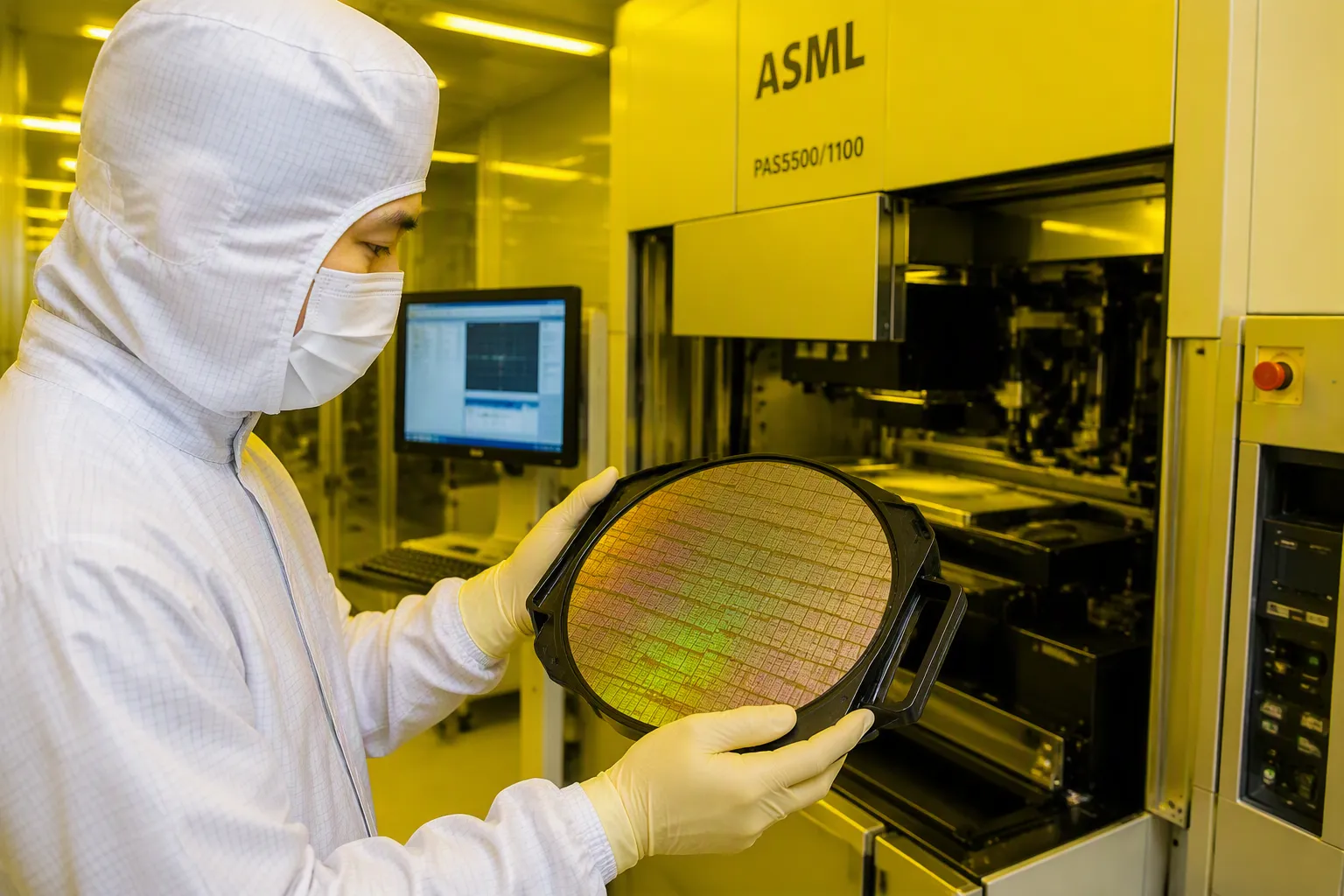
Making semiconductors pushes cleanroom technology to its limits. You work with features measured in nanometers. Any particle larger than one hundredth of the lithographic dimension causes defects. The problem gets worse as device sizes get smaller.
Photolithography creates tiny circuit patterns on silicon wafers. This step needs the cleanest environment possible.
Semiconductor making always needs tighter cleanliness, usually ISO Class 1, 3, or 5, especially for photolithography. When photolithography linewidths drop below 0.1 micron, these cleanrooms are usually Class 10 or Class 100 (ISO-4 or ISO-5). Photolithography areas must meet ISO Class 3 or ISO Class 4 standards.
Particles hurt semiconductor yield in serious ways:
Device performance drops. Particles break circuitry, hurting function and shortening device life. The effect grows as feature sizes shrink.
Yield loss happens directly. One particle on a wafer can make many integrated circuits fail, lowering overall yield and raising production costs.
Manufacturing downtime goes up. You need extra maintenance, cleaning, or recalibration to fix particle problems, which disrupts production schedules.
Quality control gets harder. You need strict inspection and testing steps, plus many resources to find and separate bad components.
Defect control follows strict rules. You must catch defects as small as one hundredth of the lithographic dimension because typical film thicknesses are much smaller than pattern feature sizes. Making device dimensions smaller by 1/3 to 1/2 needs nearly 10 times less particulate to keep the same yield. To get a 78 percent yield in a submicron process with 250 steps, each step must add no more than 0.001 killer defects per square centimeter on average. Keeping wafers for one hour in a Class 1 vertical laminar flow cleanroom is enough to reach the needed defect density level.
Putting together mechanical and optical parts needs strict contamination control. Hard drives, flat-panel displays, and high-precision optics are very sensitive to particles.
Hard drive making follows clear standards:
Standard | Class for Hard Drive Assembly | Particle Limit (≥0.5 µm) | Typical Use |
|---|---|---|---|
ISO 14644-1 | Class 5 | 3,520 particles/m³ | Hard drive manufacturing |
Federal Standard 209E | Class 100 | 100 particles/ft³ | Hard drive manufacturing |
Both standards set the same level of cleanliness. You allow no more than 3,520 particles per cubic meter at the 0.5 micron particle size limit.
For high-precision optical parts, cleanroom rules include following air purity classes (DIN EN ISO 14644-1). People are the main source of contamination. Assembly, cleaning, testing, and packaging must all happen under clean conditions. In microoptics, you must keep foreign particles off optical surfaces during assembly, so parts must be pre-cleaned. Temperature changes from high air exchange rates can hurt precision work in the Λ/4 range, so you need a balanced technical solution.
ISO Class | Particle Limit (≥0.5 µm) |
|---|---|
5 | 3,520 per m³ |
6 | |
7 | 352,000 per m³ |
Particles on precision optical lenses cause less light to pass through, coating failure, light scattering, and distortion. You control contamination with static management, moisture prevention, and stray particle removal. Design should limit moving parts to reduce contamination sources inside the assembly.
Energy technology making is a growing field. Lithium-ion batteries and thin-film solar cells need controlled spaces to ensure purity and performance.
Lithium-ion battery making needs specific conditions:
Parameter | Requirement |
|---|---|
Cleanroom Classification | ISO 8, ISO 7, ISO 6 (per ISO 14644-1) or Class 100,000; 10,000; 1,000 (per FS209E) |
Relative Humidity | Less than 2% (less than 0.3 grams of water per kg of air) |
Dew Point (Cell Assembly) | -35°C to -45°C |
Dew Point (Next-gen & Electrolyte Fill) | -60°C to below -80°C |
Air Changes per Hour (ACH) for ISO 7 | 30 to 60 ACH |
ACH for -60°C Dew Point | 180 ACH |
HVAC Energy Consumption | 29-38% of total factory energy |
ISO Class 7 is common for general cell assembly and electrode handling. ISO Class 6 applies to electrolyte filling and packaging steps. ISO Class 5 may be needed for research, development, or defect-prone steps in solid-state battery making. The dry room dew point goes as low as -40°C or even -60°C during electrode prep, cell stacking, electrolyte filling, and pouch sealing.
Solar cell making, especially thin-film types, also gains from these conditions. You need controlled spaces to stop particle contamination on sensitive photovoltaic surfaces. The same ideas of air filtration and humidity control apply to ensure high conversion efficiency and long product life.
Cleanrooms keep people safe just as much as they protect products. In hospitals, they guard patients from dangerous infections during surgery. In food plants, they stop bacteria from getting into packaged meals. In aerospace, they prevent dust from harming sensitive satellite optics. Every setting uses the same contamination-control ideas to fix different problems.
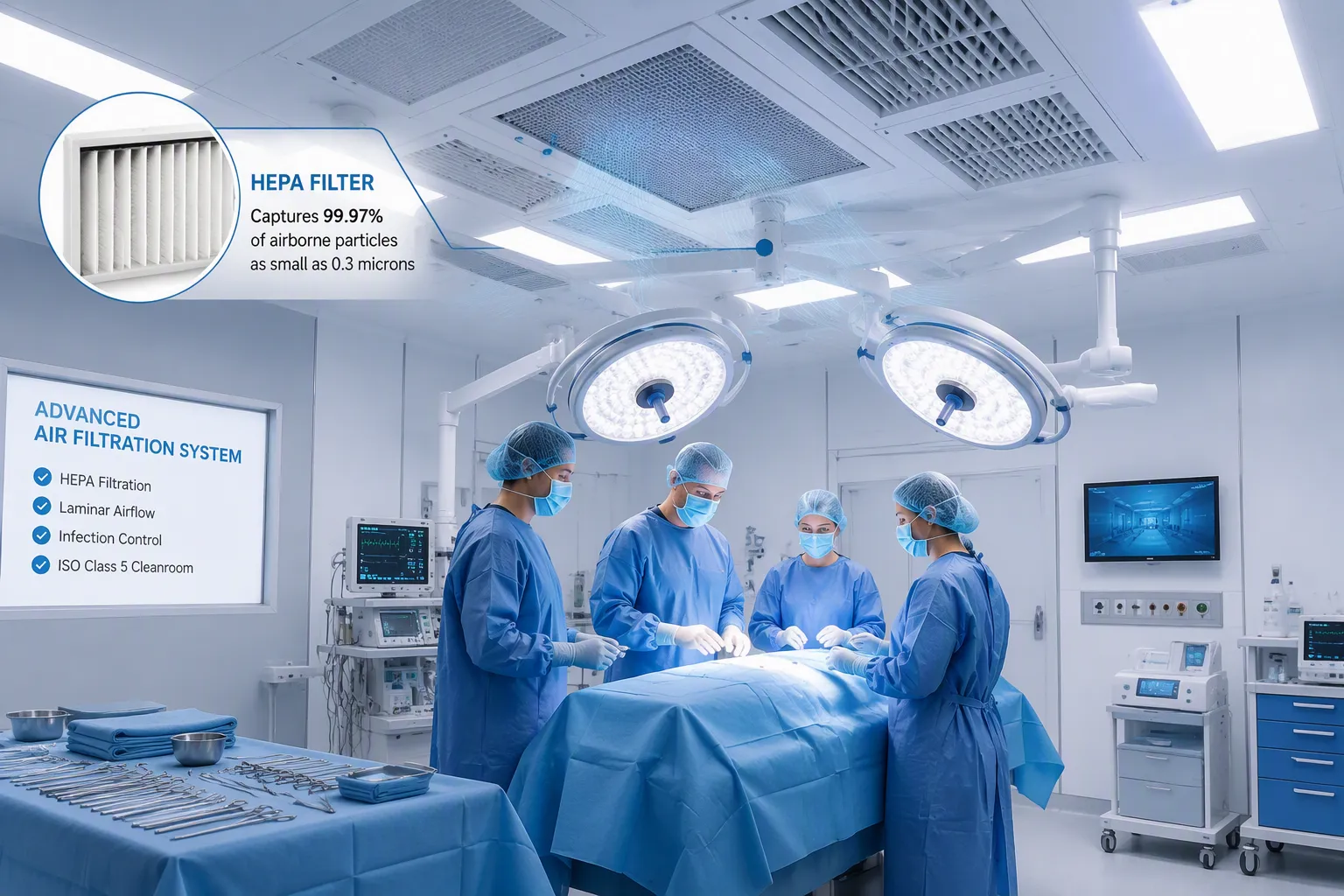
Your hospital operating room works like a special cleanroom. It shields an open wound from airborne germs that might cause a surgical-site infection. Normal room air carries thousands of particles. Those particles can hold bacteria or viruses. An operating room filters that air to keep the surgical area safe.
Surgical-site infections affect many patients each year. You stop them with strict air control. The ASHRAE 170 standard gives clear rules for hospital operating rooms.
Parameter | Requirement (ASHRAE 170) |
|---|---|
Total air changes per hour (occupied) | Minimum 20 ACH |
Outdoor air component | At least 4 ACH |
General filtration efficiency | Minimum MERV 16 |
Filtration for specialty ORs (orthopedic, transplant, neurosurgery, burn) | HEPA filters (99.97% at 0.3 microns) required at air terminal devices |
You need 20 air changes each hour in an occupied operating room. That means the whole room air passes through filters 20 times per hour. Specialty surgeries need even more safety. Orthopedic implants, organ transplants, and burn procedures require HEPA filters right at the air outlets. These filters catch 99.97% of particles at 0.3 microns. You send airflow down from the ceiling to push contaminants away from the patient.
Hospital pharmacies also use cleanroom technology. You prepare intravenous medications and chemotherapy drugs in these controlled spaces. A dirty IV solution can put pathogens straight into a patient's blood. Chemotherapy drugs add another risk. They are hazardous to anyone who touches them without protection.
Pharmacy cleanrooms follow USP <797> and <800> rules. You work inside an ISO Class 5 hood or isolator. This space allows only 3,520 particles at 0.5 microns per cubic meter. You wear full gowning with gloves, mask, and protective eyewear. The cleanroom guards both the drug and you from harm.
You might not expect cleanrooms in a food factory. Yet they matter more for extending shelf life and stopping spoilage. Aseptic packaging keeps food safe without refrigeration. You heat the product and package it in a sterile space. This process kills harmful bacteria and stops them from coming back.
Aseptic food packaging needs conditions like those in pharmaceutical making. You need ISO 14644-1 Class 5 air at the filling point. That means no more than 3,520 particles at 0.5 microns per cubic meter. But particle counts alone do not ensure microbiological sterility.
ISO 14644-1 Class 5 (formerly Class 100): Maximum airborne particle concentration of 3,520 particles ≥0.5 µm per cubic meter. This is an airborne particle classification and does not directly guarantee microbiological sterility.
You must check your aseptic food packaging line in three states. The as-built state has equipment but no people. The at-rest state runs equipment without staff. The operational state mimics real production with workers doing their jobs. You test under operational conditions to confirm the classification holds during actual filling.
In the United States, 21 CFR Part 113 covers aseptic processing of low-acid foods. Part 117 addresses current good manufacturing practices. These rules focus on hygienic design and sanitation. You cannot just meet a particle count and call your line compliant. You need HEPA filtration, unidirectional airflow, and proper pressure differences. Airflow visualization studies show eddies or reverse flows caused by equipment and operators. You fix those issues before production starts.
Satellites and precision tools demand extreme cleanliness. A single particle on an optical sensor can distort measurements from space. You assemble and calibrate these parts in controlled spaces.
Satellite setup with sensitive optical systems requires ISO Class 5 conditions. You use vertical low-turbulence displacement airflow from ceiling to floor. This pattern sweeps particles away from optical surfaces. Staff enter through an airlock system moving from ISO 7/8 to ISO 5.
Molecular contamination is a hidden danger. Organic molecules can coat optical surfaces and disturb spectral readings. You add activated carbon filters to remove these airborne molecular contaminants. You also ban silicone materials in the cleanroom. When moving sensitive parts, you use mobile cleanrooms of ISO Class 8 pressurized with dry nitrogen. Damped shock isolation protects delicate instruments during transit.
These cleanroom uses show how contamination control protects quality across industries. Whether you save a life, preserve food, or explore space, cleanrooms make it possible.
A cleanroom helps you get steady product quality, cut down on waste, and meet rules. It keeps both products and people safe. For drug makers, this means fewer bad batches and safer medicines for patients. Cleanroom technology keeps improving, making these controlled spaces easier to use and more efficient than before.
The link between a cleanroom and final product quality is clear. Environmental monitoring under GMP rules gives you real-time and past data, helping you spot problems early. This stops contamination from hurting quality, directly cutting batch failures and boosting yield.
Contamination control protects sensitive products, which means fewer rejected batches and higher yields. Tools like laminar air flow systems and pass boxes remove particles to keep a sterile space. For semiconductor fabs, one particle can ruin whole wafer batches. The same idea applies across industries, from drugs to food. Every cleanroom keeps contaminants away from the product.
Cleanroom equipment removes particles and microbes to keep a sterile space. This contamination control directly protects sensitive products, keeping quality and reliability—which means fewer rejected batches and safer end products for patients.
You also keep workers safe. A cleanroom can hold hazardous substances like chemotherapy drugs or strong APIs inside the controlled space. Worker safety improves along with product quality through full gowning, containment, and airflow control.
Building a traditional cleanroom takes two to three years. Modular cleanrooms change that timeline a lot. You can set them up in 12 to 18 months versus 24 to 36 months for traditional builds. You start small and add capacity as your pipeline goals are met. New modules can be added without stopping current work. These facilities come built to ISO 14644 and GMP standards with full qualification paperwork.
Benefit | What It Means for You |
|---|---|
Speed to Operation | 12–18 months vs. 24–36+ months |
Scalability | Add capacity without disruption |
Cost Predictability | Fixed pricing, fewer change orders |
Regulatory Confidence | Built to ISO and GMP standards |
Flexibility | Repurpose for new therapies |
The 2026–2034 period marks a clear shift, with AI-driven predictive maintenance, more IoT-enabled systems, and remote monitoring coming in, changing the market's growth and competition.
High-precision sensors and cloud analytics lower operating costs and boost system reliability. You can watch particle levels, temperature, humidity, and pressure from anywhere. IoT-enabled monitoring is a big step forward in cleanroom tech, giving you real-time views of facility performance.
Cleanroom HVAC systems have always used a lot of energy. New designs fix this by improving how and when air moves through the space.
Performance-based airflow management checks particles in specific areas and adjusts airflow based on real needs rather than fixed rules. This saves energy while keeping cleanliness standards. Flexible air change rates allow lower airflow when the cleanroom is not in use, with constant monitoring keeping performance. Advanced tech like Electrically Controlled Motors and Variable Frequency Drives adjust airflow speed, cutting energy costs.
Design Strategy | Energy Benefit |
|---|---|
Performance-based airflow | Reduces airflow in low-need areas |
Flexible air change rates | Lowers energy during idle periods |
ECM and VFD technologies | Cuts costs by adjusting air velocity |
Cleanroom technology is becoming easier for smaller companies to use. Modular builds, smart monitoring, and efficient designs lower the barriers to entry. Brands like maya help with this trend by offering turnkey solutions that mix cleanroom design know-how with practical, scalable delivery.
You find cleanrooms in many industries, making lifesaving drugs and manufacturing microchips. Their core value lies in protecting your product integrity, patient safety, and research accuracy. Every contaminant you remove reduces waste and increases quality control. The cleanrooms used for these critical tasks rely on strict contamination control standards. New cleanroom technology evolves every year. Designs become more modular, intelligent, and energy-efficient. This shift makes these controlled environments more accessible for your smaller operations. No matter your industry, any process requiring absolute purity will rely on a cleanroom. This need for perfection continues to grow. Their impact spans from the tiniest microchip to the most complex biologic drug. Companies like maya drive this innovation forward with their comprehensive cleanroom solutions.
A cleanroom controls tiny particles, germs, and vapors in the air. You use it to keep sensitive products, research, or people safe from contamination. Industries like drug making and electronics depend on these rooms to meet quality and safety rules.
HEPA filters catch at least 99.97% of particles as small as 0.3 microns. ULPA filters work even better. Airflow patterns then move clean air across your work area. Laminar flow sends air in straight lines. Turbulent flow mixes air to dilute contaminants.
ISO 14644-1 sets nine levels of cleanliness. ISO 1 is the cleanest. ISO 9 is the least clean. An ISO 5 room allows only 3,520 particles at 0.5 microns per cubic meter. Your product tells you which class you need.
Drug manufacturing holds the biggest share at 31.90%. Biotechnology comes next as the second-largest part. You also see cleanrooms in electronics, healthcare, food processing, and aerospace. Each field uses controlled spaces to protect different products or steps.
You clean at the start of each shift, before every batch, and every 30 minutes during ongoing work. You also clean after any spill. Nearby areas need daily surface cleaning and weekly deep cleaning. Always follow your written rules for approved cleaners.
Positive pressure pushes air out of the room. You use it to keep contaminants from coming in. Negative pressure pulls air inward. You use it to hold hazardous materials inside. Pressure differences between zones are usually 10 to 15 pascals.
Modular cleanrooms now go up in 12 to 18 months instead of 24 to 36. IoT sensors give you live data on particle levels. Energy-saving designs lower HVAC loads. These changes make cleanroom technology easier for smaller operations to use.
Look for experience with full projects and meeting regulations. Marya has delivered solutions to almost 60 countries. Their services cover design, testing, and support after sale. One partner makes your project simpler from start to final approval.