Views: 0 Author: Shanghai Marya R&D Team Publish Time: 2026-08-24 Origin: Site
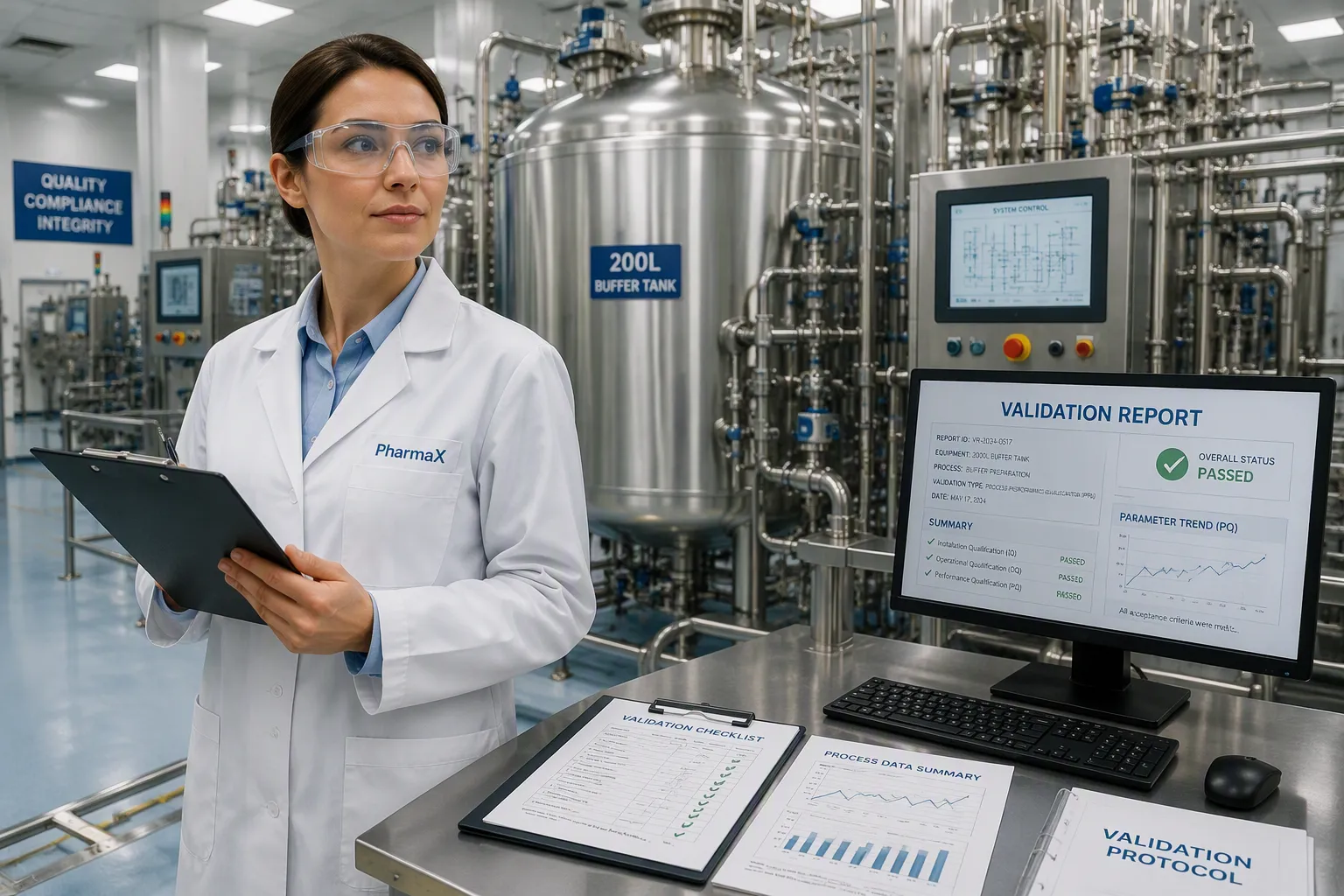
Pharmaceutical Process Validation is the backbone of pharmaceutical manufacturing. It is a documented, scientific way to prove that your manufacturing process always makes products that meet quality standards. This practice protects patients and meets regulatory requirements.
Pharmaceutical Process Validation is key to pharmaceutical manufacturing because it gives strong proof that the procedure produces consistent results, meaning the required specifications have been met.
Your main goal is to design, create, and maintain a drug manufacturing process that makes products with key traits: identity, strength, quality, purity, and potency. Pharmaceutical Process Validation is extremely important. Without it, you risk product failures, regulatory warnings, and patient harm. The pharmaceutical industry relies on this method to ensure every batch matches the next. Mastering Pharmaceutical Process Validation turns compliance from a burden into a competitive edge.
Table of Contents
Process validation proves that your manufacturing process always creates products of good quality.
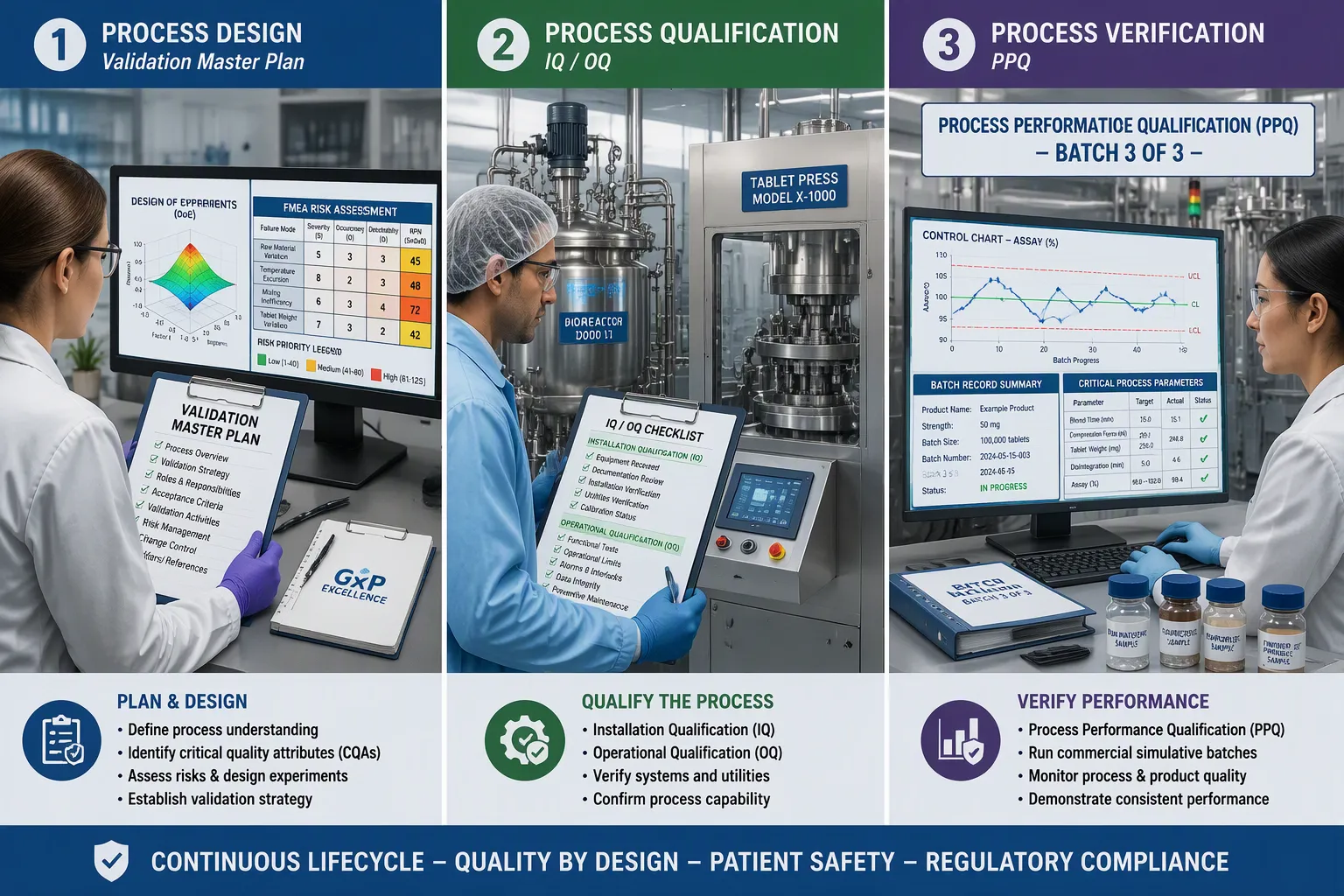
You should follow three stages: design, qualification, and continued verification.
Use prospective, concurrent, or retrospective validation depending on where your product is in its development.
Revalidate after changes to equipment or materials.
Partner with experts like marya to simplify validation and ensure compliance.
Process validation is a written way to show that a manufacturing process can always make a product that meets its quality standards. This definition from regulatory guidance forms the base of modern pharmaceutical manufacturing. You must show, through written proof, that your process works every time. This proof keeps patients safe and satisfies regulatory bodies.
The European Union's GMP Annex 15 gives a clear definition that shapes industry practice:
EU GMP Annex 15 definition: "Process validation is the documented evidence that a defined extraction process consistently produces a product meeting its pre-determined specification and quality attributes."
This definition highlights documentation and consistency. You cannot rely on final product testing alone. Quality must be built into the process from the start. Regulatory agencies worldwide, including the FDA, require this scientific approach.
Several core principles guide effective process validation:
Process Understanding: You must know your critical process parameters and how they affect product quality. Scientific and statistical methods, such as risk assessment and process characterization, help you gain this knowledge.
Lifecycle Approach: Process validation follows three stages: process design, qualification, and continued process verification. This lifecycle connects with your overall product development for ongoing monitoring.
Risk-Based Approach: You spot potential risks using tools like Failure Mode and Effects Analysis (FMEA). Then you put controls in place to reduce those risks properly.
Statistical Techniques: Tools such as statistical process control, process capability analysis, and design of experiments help you check performance and find variability.
These principles match pharmaceutical validation guidelines from both the FDA and EU authorities. The pharmaceutical industry relies on this structured method to ensure batch-to-batch consistency.
The importance of process validation goes far beyond regulatory paperwork. It directly affects patient safety and your company's financial health. When validation fails, the costs rise quickly.
Cost Category | Cost Range | Context |
|---|---|---|
Failed validation runs | $50,000 - $500,000 per run | Repeat validation cycles required after failure in pharma or device manufacturing |
Failed batch (biologics/specialty pharma) | $500,000 - $5 million per batch | Direct material and production cost for a single failed batch |
These numbers show why you cannot treat validation as an afterthought. A single failed batch in biologics manufacturing can cost millions. The importance of process validation becomes clear when you calculate potential losses.
Regulatory compliance demands rigorous validation. GMP inspectors expect written proof that your process consistently makes quality products. Without proper validation, you face warning letters, product recalls, and possible shutdowns. Patient safety remains the top priority. A poorly validated process can release bad medication into the market.
Method validation also plays a key role in this framework. You must validate your analytical methods alongside your manufacturing process. This ensures your testing correctly measures product quality. The guidelines require this dual approach to guarantee complete oversight.
Process validation gives you confidence in your manufacturing operations. It turns compliance from a burden into a competitive advantage. When you master this discipline, you cut waste, boost efficiency, and build trust with regulators and customers alike.
The FDA's guidance describes three clear stages of process validation that cover the entire product lifecycle. This framework takes you from initial design through commercial production and ongoing monitoring. Knowing these stages helps you build quality into your process from the start.
Stage 1 focuses on defining your commercial manufacturing process. You gather knowledge from development studies, pilot-scale work, and design of experiments (DoE) to create a repeatable process. Your team identifies Critical Quality Attributes (CQAs) that directly affect product safety and effectiveness. You also define Critical Process Parameters (CPPs) that impact those attributes.
Quality by Design (QbD) principles guide this stage. You set up a design space and control strategy based on science, not guesswork. Risk assessment tools like Failure Mode and Effects Analysis (FMEA) help you rank experiments. You put effort into parameters with big impact while spending less time on low-impact ones. This risk-based testing ensures you fully understand both raw materials and process parameters.
Your main outputs include a process description, defined CPPs, and acceptable operating ranges. You also create a Validation Master Plan (VMP) that outlines your resources and strategy. This documentation becomes the base for all later validation steps.
Stage 2, Process Qualification, proves your process design works at commercial scale. You finish Installation Qualification (IQ), Operational Qualification (OQ), and Performance Qualification (PQ) to confirm equipment setup, intended operation, and steady performance. Process Performance Qualification (PPQ) needs at least three successful batches in a row. The FDA expects this stage done before commercial distribution.
Full documentation of every validation step—from planning to execution—is a regulatory requirement in medical manufacturing, giving a clear audit trail for both internal reviews and external GMP inspections.
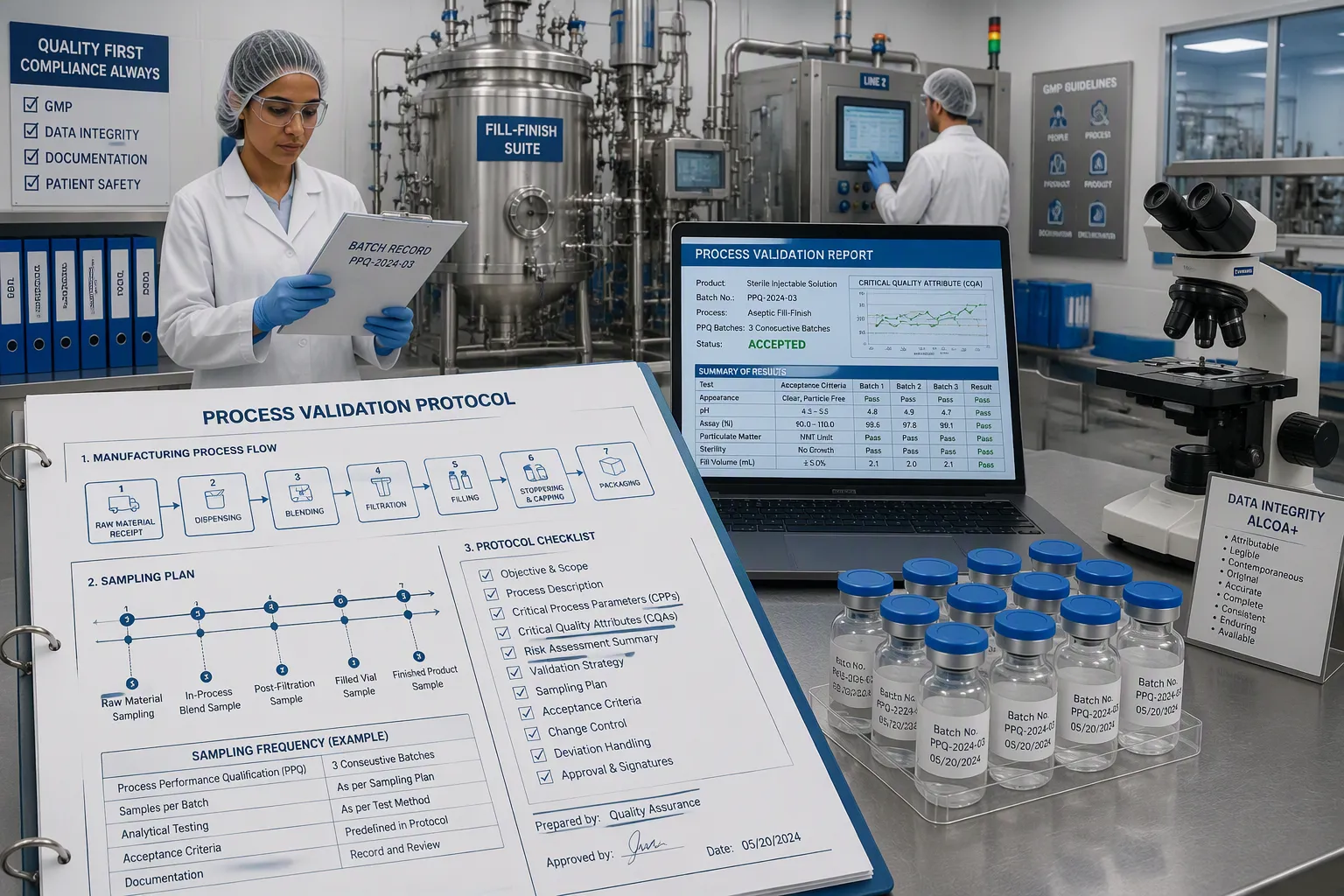
Your PPQ protocol must include purpose, scope, test procedures, acceptance criteria, and how to handle deviations. The final report summarizes results, compliance checks, and conclusions. Both documents serve as key evidence during regulatory inspections.
Stage 3, Continued Process Verification (CPV), watches your process during routine production. You use statistical process control (SPC), control charts, and capability indices (Cpk) to spot drift. This ongoing analysis confirms your process stays in control. You set escalation triggers for out-of-trend signals and review them regularly.
How Process Validation Addresses It | |
|---|---|
Adequate prospective or retrospective validation | Validation ensures product quality when the process runs within set parameters |
Equipment documentation | Documentation shows routine production equipment matches validation study equipment |
Operator qualification | Qualified operators keep proper control of validated processes |
Change and deviation review | Documented changes decide if revalidation becomes necessary |
For Stage 2, validation services—including FAT/SAT, installation, and documentation—help you show compliance efficiently. Expertise in aseptic filling lines makes your qualification efforts smoother. This approach cuts delays in regulatory approval and keeps your reputation for making safe, effective products. The FDA process validation guidance stresses this lifecycle approach, and mastering all three stages of process validation sets you up for long-term manufacturing success.
Regulatory bodies recognize many types of process validation. Each type has a different job in the product life cycle. You must pick the right method based on your product's stage and production history.
Prospective validation happens before business production starts. You use this type when starting a new product or a new plant. You run planned steps to create written proof that the process will produce the desired quality every time. This method is the best way for new product launches.
Concurrent validation takes place during real business production. You use this method when a process has little history or needs live monitoring. You watch key steps and test end product to show the process stays in control. This type works for products where early data is not enough.
Retrospective validation is for existing processes that never got formal validation. You look at past batch records and test data to check the process stays controlled. Regulators allow this only for long-standing processes with no recent changes. You cannot use it for new products or those with big changes.
Validation Type | When to Use | Key Example |
|---|---|---|
Prospective | Before commercial production | New product launch |
Concurrent | During commercial production | Limited batch history |
Retrospective | After years of production | Legacy process without formal validation |
These types of process validation match the WHO guidelines for process validation and the EMA process validation framework. The PIC/S guidelines for process validation also accept these categories. Knowing these types of process validation helps you pick the right plan for your specific situation.
Revalidation is needed when changes happen in your production process. You must revalidate after equipment changes, raw material changes, moving plants, or process setting changes. The FDA needs written proof that your process keeps making quality products after any big change.
Regulatory compliance needs close focus on revalidation causes. Under FDA regulations, you must keep approved written steps for production and process control. The rules say you must validate how well the processes causing variation work. You must also watch key process settings and quality traits through ongoing process checks.
Your revalidation program should use a risk-based method. You figure out the effect of each change on product quality and decide the right amount of revalidation. Small changes may need only specific tests. Big changes need thorough full process qualification with many batches.
The FDA wants you to keep a controlled state throughout the product life cycle. You must track data to find drift or more variation. When you see surprise variation, you start an investigation and fix. These steps keep patients safe and stay compliant with rules.
Regulatory guidance supports these needs. You should write down each revalidation choice and its reason. This writing shows your dedication to quality and pleases rule checkers during audits.
Building a robust process validation program requires a structured approach. You must follow clear steps to ensure your manufacturing process consistently delivers quality products. The process validation guidance from regulatory bodies gives you a proven framework for this work.
Start your validation program with a solid foundation. Identify critical process steps and potential sources of variation. Design validation scenarios that test different conditions. Establish measurable acceptance criteria for each process outcome. Execute your protocols with multiple operators following documented procedures. Analyze results for process capability and documentation accuracy.
A more detailed approach follows the principles of process validation, including thorough documentation of all steps from planning to execution, as required by regulatory guidance.
Following this process validation guideline ensures you cover every requirement. The table below summarizes best practices for each stage of the lifecycle.
Best Practice | Stage/Context | Purpose |
|---|---|---|
Adopt a lifecycle approach | Throughout product lifecycle | Shift from one-time event to continuous validation expected by global markets |
Apply science and risk-based principles | Process Design | Combine development knowledge with structured monitoring to ensure patient requirements translate into product attributes |
Establish comprehensive process design | Process Design | Focus on understanding variability sources and translate them into a defined control strategy |
Use statistical rationales | All stages | Provide scientific evidence of process robustness and reliability |
Implement step-by-step approaches | Process Qualification | Verify equipment, facility, and commercial-scale runs through IQ, OQ, PQ, and PPQ |
Conduct ongoing monitoring | Continued Process Verification | Analyze data during routine production to maintain control and detect variability |
Statistical tools form the backbone of this method. You use Design of Experiments to identify critical parameters. You apply Statistical Process Control for ongoing monitoring. You run capability analysis to prove process robustness. These tools provide data-driven evidence that supports regulatory filings and withstands agency scrutiny.
Revalidation deserves special attention in your program. Certain triggers demand you revalidate your process. Common triggers for revalidation include changes to equipment, materials, or process parameters, as well as deviations from the validated state. The scope of revalidation depends on the nature of the change and should be determined by risk assessment.
The frequency of periodic revalidation is not fixed. You should justify it based on a risk assessment and regulatory guidelines.
This process validation guidance helps you build a program that satisfies regulators and protects patients. You must document every step and justify every decision. Your commitment to a robust program shows in your audit results.
You need a partner who understands the complexities of aseptic production. Validation services cover the full qualification lifecycle, including FAT/SAT, installation, commissioning, and documentation. These services help you demonstrate compliance efficiently. Your aseptic production line requires precise control. Integrated solutions reduce validation complexity. A turnkey approach ensures every component works together. Cleanroom solutions add another layer of confidence. Global experience ensures proven methodologies. Your process validation program becomes stronger, your timelines shorter, and your compliance more certain.
Process validation is a lifecycle activity that ensures product quality, safety, and regulatory compliance. You must master the three stages of process validation: process design, process qualification, and continued process verification. The four types of process validation—prospective, concurrent, retrospective, and revalidation—each serve distinct purposes. A robust process validation program protects patients and satisfies regulators. For aseptic lines, you need successful media fill simulations and filtration validation to ensure sterility. FAT and SAT verification stages complete your compliance chain. Review your current practices today. Continuous improvement keeps your process validation effective and your products safe.
For Process Performance Qualification (PPQ), you usually need three successful batches in a row. This rule comes from FDA guidance. Three batches show consistency without costing too much. Your process validation protocol should list clear acceptance criteria before you begin. Regulators expect this method for most pharmaceutical manufacturing processes.
Qualification shows that equipment works the right way. Validation shows that your whole manufacturing process makes quality products every time. Qualification is one part of the larger process validation system. You finish Installation Qualification, Operational Qualification, and Performance Qualification before full process validation. Each step adds confidence in your entire system.
You must revalidate after big changes. These include replacing equipment, moving facilities, changing raw material suppliers, or adjusting process settings. Regulatory rules require written proof that your process still controls quality after changes. Your risk assessment decides how much revalidation you need. Small changes may need limited testing; major changes require full qualification.
A new vaccine filling line needs prospective validation before commercial production starts. A legacy product without formal validation history may use retrospective validation with past batch data. Concurrent validation happens during live production for products with limited batch history. These process validation examples show how different situations need different methods.
Timelines depend on product complexity and batch size. A simple aseptic filling line may take several months from protocol development through PPQ execution. Complex biologics can take longer. Your process validation guidance should include a realistic schedule with extra time for deviations. Planning ahead prevents regulatory delays.