Views: 0 Author: Site Editor Publish Time: 2026-08-03 Origin: Site
Pharmaceutical manufacturing is large factory work. It makes prescription and store medicines. This big industry changes raw ingredients. It turns chemicals into safe pills. It also uses biological compounds. Companies follow strict safety rules. They use cGMP standards daily.
Core Objective: Plants test every step often. This ensures high drug quality. It checks purity and identity. It guarantees correct strength too.
Table of Contents
Medicine factories change raw chemicals into safe consumer drugs.
Workers mix active ingredients with fillers for exact doses.
Continuous making replaces slow step-by-step methods with fast lines.
Outside companies help developers make drugs without expensive factories.
Strict cGMP rules and FDA visits prevent dangerous contamination.
Jobs in this field require science degrees and skills.
Modern plants handle huge production runs. They change raw compounds into drugs. Factories use batch processing methods often. This helps distribute medicines to markets.
Pharmaceutical manufacturing changes raw chemical items. It creates safe consumer remedies. Workers follow exact master records daily.
Factories take active ingredients (APIs). They mix them with inactive excipients. Technicians turn mixtures into solid pills. They also make liquid solutions.
Particle Size Distribution (PSD): Workers mill materials to control size. This controls drug absorption speed inside. It ensures accurate drug delivery.
Safety Protocols: Facilities use anti-explosion systems. This protects low ignition energy materials.
Patients need the exact same strength. Every dose must match completely. Standard settings keep quality very uniform.
APIs must meet strict health rules. Safety criteria apply everywhere always. Foreign facilities get inspected directly too. Regulators like the FDA check them. This keeps consumer safety protected.
Category | Objective / Requirement | Details |
|---|---|---|
Technical Processing | Purity & Potency | Multi-stage chemical reactions isolate molecules. |
Technical Processing | Contamination Prevention | Tests check for impurities. |
Regulatory & Quality | Plants follow guidelines strictly always. |
Large factories supply steady medicine stocks. This keeps global health systems running.
Shortages harm patient health fast. Plant managers watch production schedules closely. This action prevents total stockouts effectively.
Cause Category | Key Factors & Supporting Metrics | Impact on Supply Chain |
|---|---|---|
Quality & Manufacturing Delays | FDA data shows quality issues cause shortages. | |
Delays cause thirty percent more. | This creates API unavailability quickly. | |
Generic drug shortages happen often. | ||
Single-Source Reliance | Companies rely on single foreign suppliers. | |
Key generic drugs depend on them. | This increases supply vulnerability fast. | |
It drives sudden price inflation. | ||
Global Crises | Global crises cause big bottlenecks. | Logistics issues limit therapy access. |
Factories must boost production during outbreaks. Teams modify continuous lines quickly. They increase worker shift coverage fast. They make emergency treatments right away. This rapid flexibility helps health agencies. It stops spreading diseases effectively.
Drug developers move new medicines forward. They use several technical steps. Pharmaceutical manufacturing changes small discoveries. It makes them mass-produced treatments. Every phase needs exact control. This protects safe drug use.
Scientists create simple early formulas. They work in small labs. Engineering teams prepare these recipes. They fit large factory machines.
Tech transfer teams move processes. They go from labs to plants. Scientists write clear rules for workers. Equipment operators adapt lab methods. They use big industrial machinery.
Plants need full manufacturing proof. They also need plant approval. Rules demand three full runs. These runs must succeed without stopping.
Metric / Phase | Duration / Rate | Operational Scope |
|---|---|---|
Preliminary Evaluation | 3 to 6 months prior | Identifying gaps and evaluating necessary resources |
Document Preparation | 2 to 4 months prior | Drafting protocols and standard operating procedures |
Training Program Setup | 1 to 3 months prior | Establishing educational content and assigning trainers |
End-to-End Transfer Duration | 6 to 12 months | Complete lifecycle from initial planning through validation |
Project Complication Rate | Up to 50% | Percentage of transfers encountering major delays or quality problems during scale-up |
Modern plants use smart sensors. These devices track active making. Process analytical technology checks levels. It measures inside mixing tanks.
Key Tech Advantage: Real-time sensors track temperature now. They check moisture and purity. This happens inside running machines. Quick alerts stop early defects.
Engineers change settings during work. Quick fixes remove manual tests. Automated checks speed up runs.
Factories make active drug items. They use controlled chemical reactions. They also use biological steps. Synthetic routes extract clean molecules.
Chemical plants make active substances. They use big multi-step tanks. Chemical reactions change organic items. They create pure healing molecules.
Raw items enter glass reactors.
Solvents start precise molecular changes.
Centrifuges separate solid product crystals. They remove liquid waste quickly.
Dryers remove extra solvent safely.
Technicians watch drug amounts constantly. Strict heat controls raise output.
Biologics need living cells daily. Plants grow special mammal cells. They also grow bacterial cells. They use big steel tanks.
Living cells create complex proteins. They release them into broth. Workers harvest cells after growth. Chromatography columns clean these proteins. They separate pure items from waste. Filters concentrate pure protein liquids.
Formulation plants mix active items. They add safe inactive powders. Processing turns raw drug molecules. It makes easy consumer doses.
Pill making needs uniform mixes. Technicians blend active drug items. They mix them with excipients. They use big spinning blenders.
Raw Powders -> Dry Blending -> Fluid Bed Granulation -> Tablet Compression -> Film Coating
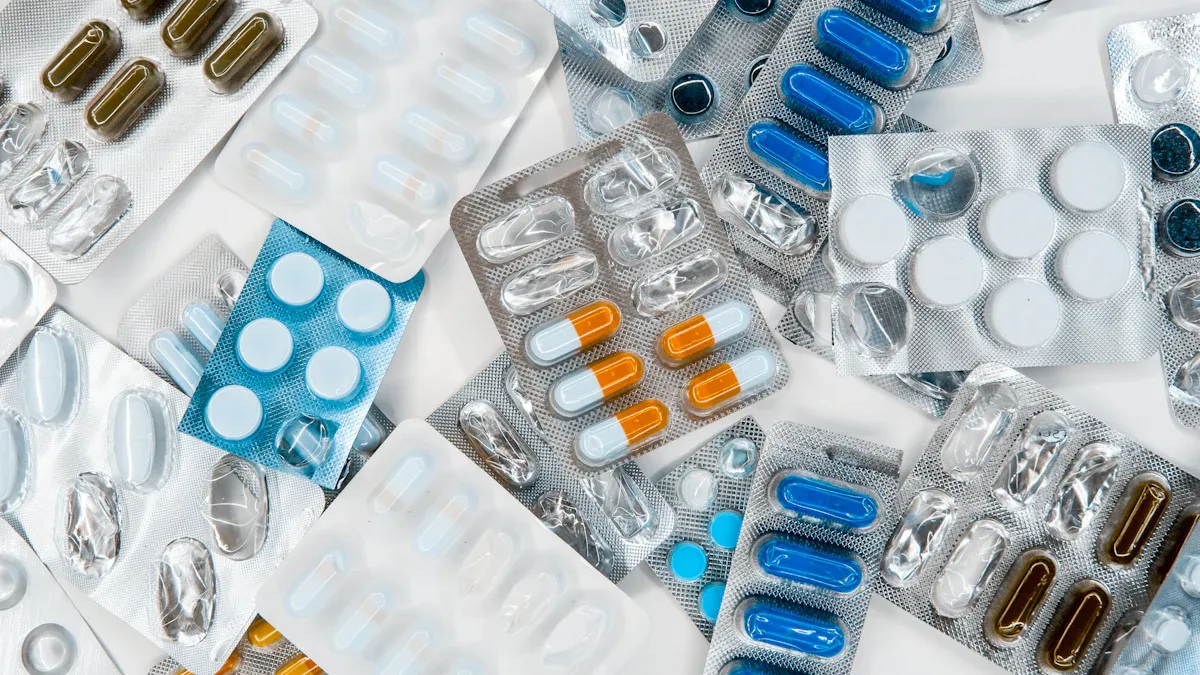
Granulation machines bind small grains. Modern rotary presses squeeze powder. They make firm hard tablets. Fast tools coat tablets well. This covers bad bitter tastes. Packing lines seal tablets fast. They use protective blister cards.
Shot drugs need ultra-clean rooms. Automated lines bottle liquid medicines. They work inside clean isolators.
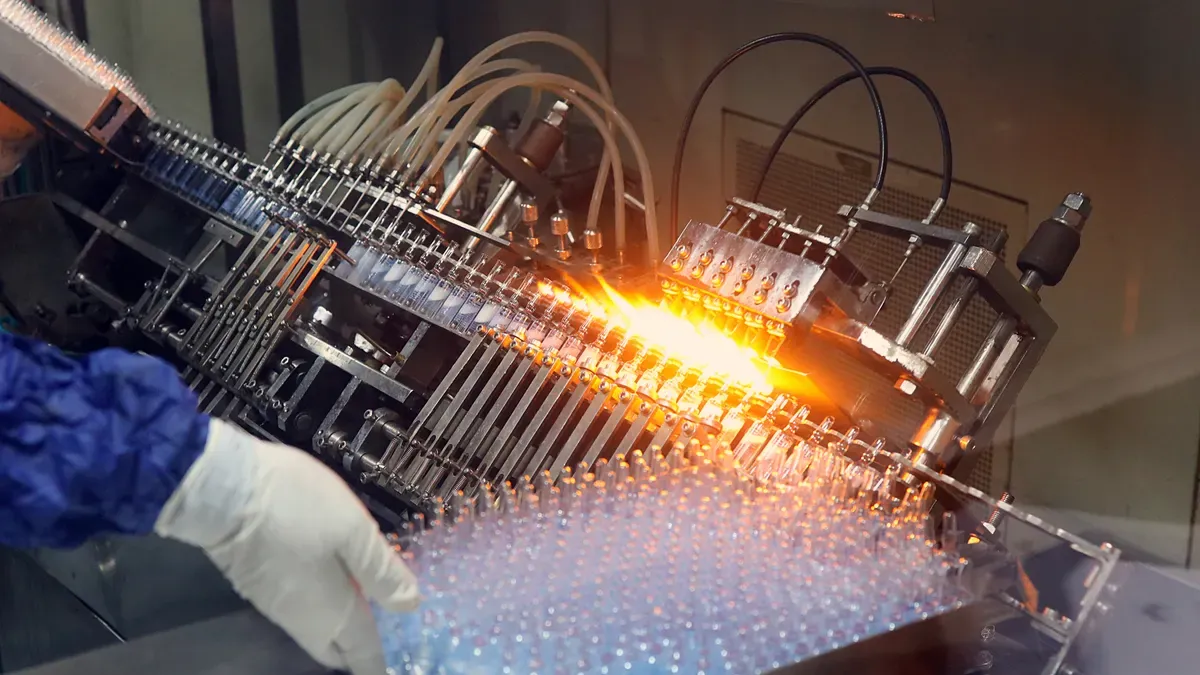
Filters clean germs from liquids. This happens before full bottling. Robot arms fill glass bottles. They measure exact medicine liquid. Machines add rubber tops fast. Capping tools seal metal rings. This protects total drug cleanliness.
Drug plants often use step steps. They turn simple chemical items into drugs. New tools now let companies change ways. They move away from stop-and-go jobs. They build fast nonstop making systems.
Old factories run work in clear steps. Workers move exact material amounts around. They pass items through split steps. They stop tools to clean them. Workers check item quality by hand.
Isolating Operational Risk: Bad machine issues hurt one batch. This stops big total plant shutdowns.
Facility Adaptability: Workers change large plant tanks fast. They make many different drug formulas.
Standard Regulatory Precedent: Health groups know standard batch rules. They use old set check ways.
Still, batch work needs long waiting times. Items sit in hold tanks often. This adds long delay times overall.
Continuous lines join raw drug feeds. They combine reaction tanks and pill presses. They make one smooth making line. Smart tools add needed items constantly. Sensors test drug quality right away.
Efficiency / Cost Metric | Impact of Continuous Manufacturing |
|---|---|
Operating Costs | Cuts spending by six to forty percent. |
Capital Costs | Lowers new setup costs very fast. |
Production Timeline | Drops total drug time to two days. |
Continuous methods also help make biologic items:
Parameter | Continuous Bioprocessing (CB) | Fed-Batch (FB) Method |
|---|---|---|
CapEx & Footprint | Saves money and saves factory floor space. | Needs bigger plants and higher build costs. |
Scaling & Speed | Keeps the same size across all steps. | Needs extra scale checks before late stages. |
Product Quality & Integrity | Gathers clean product out without any delay. | Items sit inside big tanks two weeks. |
Operational Fit | Fits complex new living drug cell setups. | Fits old batch limits much less today. |
Workforce Requirement | Needs smart skilled workers for hard jobs. | Uses regular standard work methods instead. |
Operational Advantage: Continuous tool setups remove hold tanks completely. Smart fast sensors catch all changes instantly. This drives high final product quality.
Drug creators hire external partner plants. They send hard drug making work out. Working with outside factory teams speeds work. It helps launch new drugs faster.
Contract groups give full machinery setups. These expert partners handle raw supply needs. They check real process steps carefully. They scale work and pack final drugs. They follow strict health rules always.
Drug Discovery -> CDMO Transfer -> Process Optimization -> Commercial Production -> Market Distribution
Contract specialists hold deep technical skills. They master hard chemical reaction paths. Drug developers use these outside teams. They run processes without building big plants.
Using outside makers changes company money plans. Firms change big fixed plant costs. They turn them into lower variable costs.
Capital Expenditure Reduction: Firms save money by skipping plant builds.
Capacity Scaling: Makers match output to real market needs.
Supply Chain Risk Mitigation: Multi-site networks protect supply lines during disruptions.
Outside helper teams let young firms save money. Firms put cash into clinical tests. They still use modern big factories.
Strict rules control pharmaceutical manufacturing now. Laws keep unsafe drugs away. Firms use set rules. This keeps medicines clean.
Good safety rules set basic standards. Agents check every facility.
The FDA enforces main health rules. Inspectors issue strong penalties fast. Punishments include these steps:
Warning Letters: Notes show bad rule breaks.
Product Recalls: Firms pull bad drugs back.
Import Bans: Agents stop bad foreign items.
Facility Shutdowns: Factories stop all work.
Common citations show big factory failures:
CFR Citation | Regulatory Requirement | Inspection Impact |
|---|---|---|
21 CFR 211.22(d) | Quality team written rules | Top cited issue |
21 CFR 211.192 | Error checks and reviews | Second top citation |
Subpart J | Log and report care | Big observation share |
Subpart I | Lab check rules | Key observation area |
Global groups match safety rules together. Agents use eight check steps:
Preparation and planning: Teams check old logs.
On-site inspection: Auditors check plant tools.
Document review: Inspectors verify lab data.
Sampling and testing: Agents test real items.
Observations and findings: Staff write down gaps.
Exit meeting: Auditors share early notes.
Follow-up and compliance action: Plants send fix plans.
Final inspection report: Agents post final results.
Makers separate plant systems from tests. Both teams protect patient health.
Operational Category | Quality Assurance (QA) | Quality Control (QC) |
|---|---|---|
Operational Focus | Stops overall system bugs | Finds bad product flaws |
Methodology | Uses early process steps | Tests items after work |
Procedural Role | Approves standard plant rules | Runs lab testing steps |
Testers check live reaction items. Workers take quick line metrics. Early checks catch bad impurities.
Managers check full batch files. Experts verify lab result data. Final sign-offs stop bad drugs.
Clean rooms need exact test steps. Engineers test tools before runs.
Qualification Stage | Primary Objective | Key Associated Documentation |
|---|---|---|
Design Qualification (DQ) | Checks design rule matches | Basic user need sheets |
Installation Qualification (IQ) | Checks correct tool setups | Setup logs and prints |
Operational Qualification (OQ) | Tests key machine ranges | Function test log files |
Performance Qualification (PQ) | Proves long tool output | Tiny germ count records |
Re-qualification | Keeps rules active always | New plan review sheets |
Special fans clean plant air. Sensors check small air dust. Daily plates catch germ growth.
Engineers test machines through cycles. Tools keep clear heat levels. Calibration keeps output steady.
Health plants fall in two main groups. Drug plants make chemical remedies. They also grow living remedies. Device plants build physical tools. They make smart testing gear. Each group uses unique tools. They use different methods daily. They follow separate health laws.
Drug making uses quick chemical changes. It relies on cell growth. Device making relies on machine parts. It uses precise physical designs.
Pharmaceutical manufacturing uses active items. Reactors mix raw ingredients safely. They use high heat settings. They use strong air pressure. Bio systems grow living cells. They harvest clear proteins daily.
Device lines build physical parts. Workers combine long plastic tubes. They add small metal screws. They place tiny electronic chips. They link smart tracking sensors. Clean room staff build units. They construct heart pacemakers. They shape strong fake joints. They build diagnostic meters carefully. They use small hand tools.
Drug Method:   Raw Chemicals -> Chemical Synthesis -> Active Powder -> Formulated Pill
Device Method: Raw Plastics  -> Molded Components -> Cleanroom Assembly -> Finished Unit
Drug plants mix APIs. They add simple inactive powders. Technicians check liquid thickness rates. They test dry powder mixes. They check tablet melting speeds. Work changes simple raw items. It alters their chemical builds.
Device plants shape solid items. They use fast power tools. They use plastic liquid molds. They stamp heavy metal sheets. Plants make plastic tool covers. They shape strong metal implants. They match exact target sizes. Staff check physical shape sizes. They skip chemical testing ratios.
Regulators use distinct safety rules. They apply separate health paths. Rules affect drug plants differently. They guide device factories separately.
The FDA checks new medicines. They run large human tests. Sponsors file formal NDAs. These files prove safe safety. They show good medicine benefits.
Device teams follow class rules. Rules match patient safety risks:
Device Risk Class | Risk Level | Primary Regulatory Pathway | Example Products |
|---|---|---|---|
Class I | Low Risk | General Controls / Registration | Surgical gloves, manual wheelchairs |
Class II | Moderate Risk | 510(k) Premarket Notification | Infusion pumps, powered wheelchairs |
Class III | High Risk | Premarket Approval (PMA) | Implantable pacemakers, heart valves |
Regulatory Insight: Class II tools match old legal units. This match grants market access. Class III tools need data. Tests match drug trial rules.
Drug firms track bad reactions. They run safety monitoring plans. Labs test saved product lots. This finds chemical breakdowns early.
Device makers watch broken parts. They track structural physical wear. Engineers gather tool field data. They check inside patient implants. Field teams run product recalls. They push quick software updates. This fixes structural part defects.
Drug plants use tech tools fast. New tools build safe factories. Smart systems boost making speeds.
Robots fix high hazard tasks. Robot arms shift soft items. Tech keeps humans off drugs.
Sealed glass units protect drugs. Glass walls block dirty air. Needles fill small vials fast. Tools seal tight rubber tops. Clean rooms stay germ free.
Smart cars move raw items. Driverless trucks carry heavy drums. Built-in sensors stop plant crashes. Robot lifts stack drug boxes. Machines end hard lifting risks.
Networks link plant machines directly. Software checks live drug steps. Smart tools raise drug output.
Technology / Approach | Impact on Production Efficiency & Yield | Metrics / Key Benefits |
|---|---|---|
Continuous Manufacturing | Keeps lines running nonstop daily. | |
Raw items make finished drugs. | Gives higher output and smaller plants. | |
Process Analytical Technology (PAT) | Fixes steps and tests output. | Raises output and stops bad runs. |
Manufacturing Execution Systems (APRM) | Automates batch logs and searches. | Cuts cycle times and manual typing. |
Predictive Maintenance (Aspen Mtell®) | Uses AI to find wear. | Stops machine breaks and saves cash. |
Digital logs change check steps. Sensors test active powders instantly. Staff view metrics on screens.
Batch Review Efficiency: Digital logs capture data automatically. This cuts review times fast.
Cycle Time Reduction: Digital plans lift work speed. They cut drug batch times.
Quality Optimization: Smart systems prevent product flaws. They fix human typing errors.
Smart tools scan reaction data. Software predicts top heat settings. Models fix machine speeds early. Managers use AI to save resources.
The medicine making industry offers great jobs. Workers need strong scientific skills. They also need good technical skills.
College degrees prepare students for factory jobs. An M.S. degree builds strong skills fast. It opens many scientific job paths. It helps in chemical making plants.
Degree Level | Academic Program / Field | Target Technical Roles |
|---|---|---|
Associate Degree | Associate of Applied Science (AAS) in Pharmaceutical Manufacturing | Production Technician, Quality Control Specialist, Quality Assurance Specialist |
Bachelor's Transfer Pathways | B.S. in Pharmaceutical Sciences, Chemical Engineering, Mechanical Engineering, Manufacturing Engineering | Entry to Mid-Level Manufacturing Science Roles |
Chemical engineers design smooth plant lines. Chemistry graduates check active drug mixes. They track chemical changes in vats. These experts keep drug making safe.
Microbiologists check clean rooms for germs. Biotech specialists manage big living vats. They grow living cell cultures carefully. They protect pure biological drug items.
Modern drug factories need skilled staff. Special teams run complex plant tools. They follow strict product quality rules.
Technicians operate large mixing tanks. They run fast tablet press tools. Process engineers scale up small lab recipes. Higher degrees train staff for tough jobs:
Master's Degree Programs:
Master's Degree in Pharmaceutical Manufacturing
Related Master's Degrees: Chemistry, Chemical Biology, Chemical Engineering, and Mechanical Engineering
Prepared Technical Roles:
Validation Engineer
Process Engineer
Quality Analyst and Quality Engineer
Quality control testers run lab drug checks. Quality assurance workers check factory logs. They find process errors fast. Regulatory analysts send logs to health groups.
Career Insight: Plant managers hire smart job candidates fast. Applicants need chemistry and rule skills. This dual training speeds up hiring.
Job seekers enter drug making step-by-step. Certificates and practical work help applicants win. These steps give candidates a real edge.
Professional certificates show strong cGMP knowledge. Candidates finish online training modules. Lessons cover main health safety rules. Certificates prove quick job readiness to managers.
College co-op programs place students inside plants. Interns use big factory machines daily. They work next to senior leaders. These real jobs lead to full-time work.
Pharmaceutical manufacturing brings together smart science. It uses steady making methods. Strict health rules guide work. Modern plants follow cGMP rules. Smart robots run machines. These clear rules protect drugs. They keep remedies safe. They ensure pure products. Patients worldwide stay healthy.
Future Outlook: New tools change plant work.
Health needs grow fast now. Pharmaceutical manufacturing offers new jobs. Engineers find great careers. Scientists join the field. Quality experts build futures. This work helps millions.
Drug making changes raw chemical items. It changes raw cell items too. This process makes safe drugs.
Factories build firm pills. They fill clean liquids. They make biological treatments.
Strict cGMP guidelines guide plant teams. Rules ensure equal drug quality. They protect drug purity. They keep drug strength steady.
Core Function: Plants change active raw items. They build accurate daily doses. These help patients everywhere.
Active drug ingredients (APIs) treat sick bodies. They give direct healing care.
Inactive excipients help active items. They bind powder mixes together. They preserve fresh liquid drugs. They coat hard tablet covers.
Making teams blend APIs with excipients. This makes solid pills. It creates easy liquid doses.
Continuous making moves raw items fast. It uses one nonstop line.
Batch work builds drug items slowly. It uses separate step steps.
Continuous setups stop long delays. They cut high plant costs. They save big factory space.
Contract groups (CDMOs) give expert services. They offer outside factory help.
Drug creators hire outside teams. This gives fast tool access. It saves cash money.
Firms scale drug output quickly. They skip building expensive plants.
Drug Developer -> Hires CDMO -> CDMO Scales Recipe -> Final Market Drug
Current Good Manufacturing Practice (cGMP) sets safety rules. The FDA enforces these rules.
Rules require clean factory rooms. They demand tested tools. They need skilled plant workers.
Strict lab tests stop drug dirt. They keep medicines safe.
Drug Manufacturing: Uses chemical steps and living cells. It makes mixed drug formulas.
Device Manufacturing: Combines solid physical parts. It joins small mechanical tools. It builds electronic tools.
It creates body implants. It builds health test devices.
Engineers need college degree training. They hold chemical engineering degrees. They hold chemistry degrees.
Some study biology technology. These programs teach liquid movement.
Students study cell growth. They learn chemical creation. They study smart machine controls.