Views: 0 Author: Site Editor Publish Time: 2026-08-04 Origin: Site
Medicine packing uses three basic layers to keep drugs safe. Primary packaging touches the medicine directly to keep it clean. Secondary packaging wraps around primary containers to stop physical damage. Tertiary packaging groups secondary boxes into big bundles for shipping. Together, these layers protect chemical quality and keep products clean. They block dirt from getting inside and ensure safe use.
Timeline Milestone | Projected Revenue / Value | Compound Annual Growth Rate (CAGR) |
|---|---|---|
2025 Base Year | USD 167.88 Billion | N/A |
2026 Forecast | USD 184.23 Billion | N/A |
2035 Target Forecast | USD 425.25 Billion | 9.74% (2026–2035) |
The global Pharmaceutical Industry uses smart shield systems. These systems protect life-saving products during long supply journeys.
Table of Contents
Three packing layers keep drugs safe during shipping.
Primary packaging touches drugs to protect their quality.
Glass bottles safely hold sensitive shots and vaccines.
Childproof caps stop kids but let adults open medicine.
Secondary packaging stops damage and shows track codes.
Dry packs in plastic bottles keep pills fresh.
Tertiary packaging groups small boxes for bulk transport.
Primary packaging touches the drug directly. Makers must pick safe materials. They must avoid bad chemical reactions. Safe materials protect the product. They stop physical damage. They prevent chemical decay. They block biological dirt.
Big health agencies watch this packing. The FDA checks it. The EMA checks it too. They inspect it constantly.
US FDA rules are strict. Packaging must fit its use. It protects the medicine. It keeps patients safe.
Region / Authority | Regulation / Standard | Purpose |
|---|---|---|
International (ISO) | ISO 15378:2017 | Sets quality rules for drug primary packaging. |
United States (FDA) | Code of Federal Regulations Title 21 | Sets US legal drug packaging controls. |
European Union | European Commission Rules | Sets binding packaging rules for EU states. |
China (NMPA) & Russia | National Health Agencies | Enforces local packaging quality standards. |
Direct packaging needs tough tests.
Engineers check material leaks first.
Approvals prove the container protects potency.
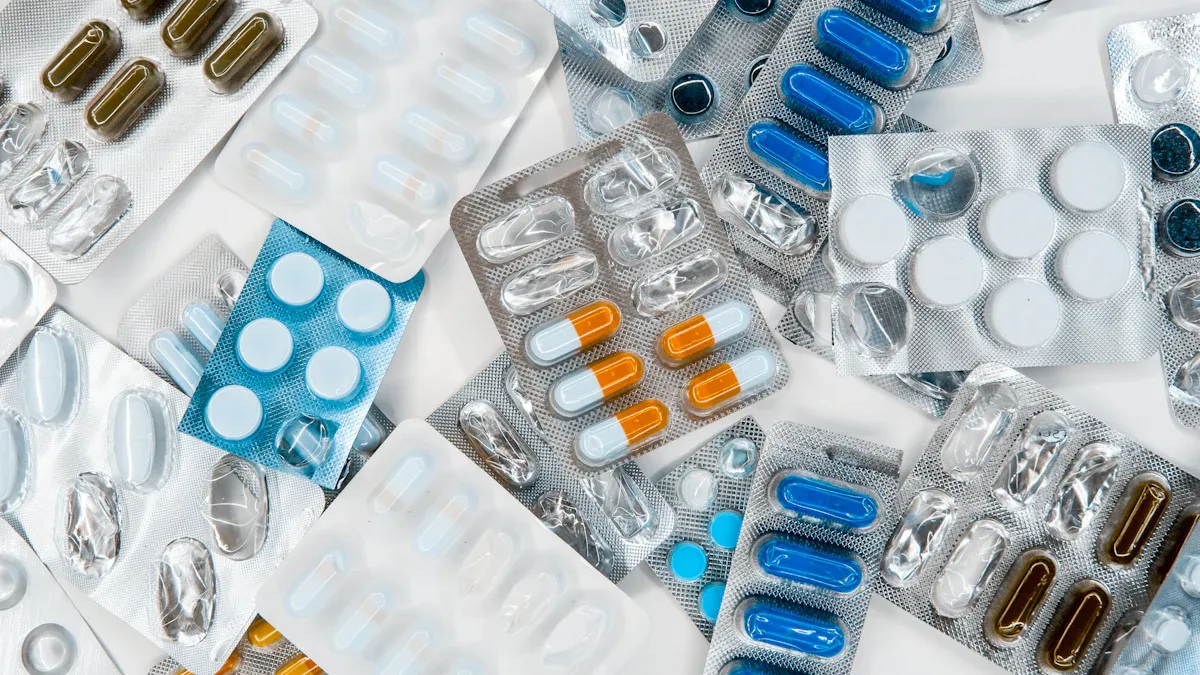
These packs protect solid oral doses. They wrap tablets and capsules. Packs keep individual doses safe.
Thermoform packs suit stable drugs well. They allow fast production. They offer clear views. Cold-formed foil (Alu-Alu) suits sensitive drugs. It provides top protection. Foil packs are bulky. This hurts shipping speed. It lowers storage ease.
Heat softens clear plastic sheets. Machines form small pockets. Pockets are called cavities. Workers put tablets inside them. Foil seals the plastic top.
Attribute | Thermoformed Plastic Blisters | Cold-Formed Foil Blisters |
|---|---|---|
Product Visibility | Clear view (shows product easily) | Hidden (product stays fully covered) |
Barrier Protection | Normal protection from outer air | Total block to light and wetness |
Material & Overall Cost | Low costs for materials | High costs and slow work |
Manufacturing Speed | Fast work for big jobs | Slow shaping speed lowers output |
Design Capabilities | High flexibility for pocket shapes | Limited shapes from metal stretching |
Product Shelf Life | Short shelf life for weak drugs | Long shelf life for sensitive items |
Cold-formed blisters use strong foil. They do not use plastic. Machines press cold foil sheets. They use no heat. This layer blocks light. It stops air and water. Water-sensitive pills stay fresh. They remain good over time.
Foil strips wrap single doses. Two flexible films enclose pills. Hot rollers seal layers tightly. Patients rip open pockets easily. Strips shield pills from damp air.
Liquid drugs need special primary containers. They keep liquids very pure.
Packaging Type | Key Advantages for Liquid Drug Formulations |
|---|---|
Glass Ampoules | • Tight seals keep bugs out. |
Glass Vials | • Great for many liquids. |
Key Takeaway: Tight glass seals block outer gases. They keep liquids sterile.
Glass ampoules hold single liquid doses. Flames melt glass necks shut. This forms a sealed wall. It blocks dirt and air. Users break the glass open.
Multi-dose vials store liquids or powders. Rubber stoppers seal the top. Metal caps hold stoppers tight. Needles go through stoppers safely. Liquids leave without open tops.
Liquid drugs need exact tools. Droppers combine tubes with bulbs. Pipettes show clear number marks. Patients measure liquid doses safely. This prevents bad dosage mistakes.
New primary containers give drugs fast. They store and deliver medicine.
New tech helps make dense liquids. They need smaller injection amounts. This helps daily care plans. It aids patient drug delivery.
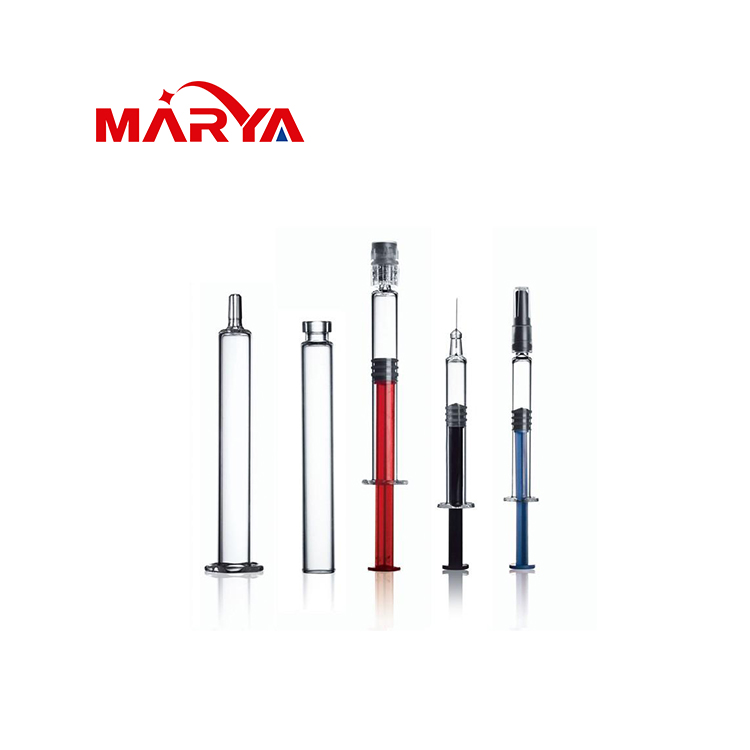
Prefilled syringes store ready liquid biologics. Glass tubes hold the medicine. Strong glass stops bad reactions. Rubber plugs seal the fluid.
Category | Findings / Evidence |
|---|---|
Technical Adoption Trends | • Moves to smart safety designs. |
Benefits | • Lowers dirt risks fast. |
Adherence & Convenience: Helps safe self-care at home (like Actemra for arthritis). It improves treatment ease.
Efficiency: Saves work for health teams. It cuts complex prep steps.
Market Growth: Helps home care grow fast (reaching high values soon). It aids easy chronic care.
Pen cartridges hold liquid drug doses. Glass tubes hold moveable stoppers. Users put cartridges in pens. Simple tools set accurate numbers. Diabetes care stays safe.
Drug makers use tough bottles to hold big medicine batches. These solid containers keep drugs safe from outside pressure. They make storing items in shops very easy.
Strong plastic bottles store daily pills and capsules. The hard material stops damage from heavy drops. It keeps water out. It never ruins the medicine inside.
Key Property | Technical Functionality | Benefit for Solid Oral Dosage |
|---|---|---|
Impact Resistance | Takes big hits without breaking | Keeps pills safer than old glass bottles |
Chemical Stability | Fights off harm from harsh liquids | Stops bottle material from changing drugs |
Portability | Weighs very little | Makes moving items easy and cheap |
Sealing & Moisture Control | Locks caps tight with dry packs | Blocks damp air to keep medicine fresh |
Makers use special caps on these plastic bottles. Heat seals make them airtight. Tiny dry packs suck up inside dampness.
Moisture Protection: Keeps pills and vitamins dry.
Chemical Resistance: Fights off chemical damage well.
Durability and Portability: Light weight meets tough strength.
Safety Integration: Works well with childproof caps.
Sustainability: Easy to recycle again.
Liquid syrups need special dark bottles. Dark amber color blocks harsh light rays. It stops blue light under 450 nanometers.
Dark glass will not ruin liquid medicine. Dark plastic bottles will not break easily. Tight caps stop all leaks. Clear small cups help measure correct doses. This stops big medicine mistakes.
Small pouches save space easily. They weigh far less than heavy glass. They protect single doses from dirt.
Small packets hold exact single powder doses. Fast machines make them from continuous rolls.
[Outer Polyester Layer] -> [Aluminum Foil Barrier] -> [Inner Polyethylene Seal Layer]
Machines fill each pocket with precision. Heat seals four sides tight. Layered foil keeps air out. Clear words show batch numbers clearly. Tiny cuts help users open packs quickly. Single packs keep remaining powders dry.
Sensitive drug powders need extra strong protection. Foil pouches block air far better than plastic.
Aluminium barrier foil bags utilize an ultra-low moisture vapour transmission rate (MVTR) to prevent moisture damage, ingredient degradation, clumping, and microbial growth in pharmaceutical powders.
Engineers mix metal and plastic layers. Every layer helps protect the drug inside.
Layer / Component | Function in Moisture Protection |
|---|---|
Aluminium Foil | Blocks air, water, and bright light |
Polyethylene Inner Layer | Seals the pouch closed with heat |
Barrier Films (e.g., OPP) | Stops sharp items from poking holes |
Internal Additives | Sucks up extra inside dampness |
Foil pouches protect special dry drug powders:
Precursor Powders Protection: Stops raw powders from absorbing wet air.
Inhalation Products: Prevents fine powders from clumping together.
Special films seal right through fine dust. Hot clamps melt layers together smoothly. This total seal keeps powder safe everywhere.
Secondary packaging wraps around primary units. It helps protect items during long trips.
Core Function: Secondary packaging stops outer damage. It keeps goods safe from plants to shops.
Secondary packaging does many big tasks:
Aggregation and Handling: Groups small packages together. This helps workers ship and count items fast.
Physical and Environmental Protection: Blocks hard hits and bad weather. It keeps boxes safe in trucks.
Traceability and Regulatory Compliance: Holds serial numbers and expiration dates. It shows safety seals and barcodes.
Supply Chain Optimization: Saves useful shelf space. It helps stores and patients use items easily.
Cartons offer light protection. Makers use paperboard boxes to stay strong.
Cartons hold single drug items. Lines build them using clear styles:
Straight Tuck End (STE): Top and bottom flaps fold same way. This makes a clean shape for light goods.
Reverse Tuck End (RTE): Top and bottom flaps fold opposite ways. It balances good function and nice looks.
Auto-bottom (Crash Lock): Uses a pre-glued bottom. It opens fast and holds heavy items well.
Makers pick strong paper rules to keep boxes tough:
Paperboard Grade: Clean white board sets top quality standards.
Board Weight: Good boxes weigh between 300–350 GSM.
Grain Alignment: Paper grain lines must match box folds.
Safety Margins: Words must stay 5mm from cut edges. They stay 3mm from fold lines.
Barcode Clearance: Scanners need clear space. Keep codes 5mm from edges and 8mm from folds.
Blister cards seal trays inside paper sheets. They show pills clearly and stop bending.
Special wallet designs help people track daily meds. They organize daily health plans well.
Calendar packs use smart layouts for daily tracking:
Integrated Calendared Blisters: Uses clear day marks near pills. It helps people see used doses easily.
Cohesive Patient Education Space: Uses outer box space for guides. It prints clear drug instructions clearly.
Discreet & Portable Design: Uses small box shapes. It fits busy daily lives easily.
Digital Tracking Technology: Uses smart tools to track exact times. It sends live dose data to apps.
Safety wallets stop kids from opening pills. They stay easy for adults to use:
Intuitive Ergonomic Features: Uses simple push or slide locks. Patients open their meds with real ease.
Senior-Friendly Safety Balance: Helps older people open packs fast. It stops missed daily doses easily.
Outer boxes group retail items together. They help workers move big product batches.
Big containers keep small cartons neat inside. They stop thin boxes from crushing down.
Smart boxes go straight to shop shelves. Workers open boxes fast without cutting items inside. This process helps the global Pharmaceutical Industry work much faster.
Tertiary packaging moves big goods safely. Logistics teams use large shipping containers. They set up heavy pallet systems. These setups keep cold drugs safe over long trips.
Structural Role: It forms a tough outer layer. It protects many smaller boxes during trips.
Material Composition: Makers use strong wood and thick paperboard. They use sturdy pallets for top strength.
Shipping teams use tough paperboard boxes. These boxes move drugs safely along trade routes.
Double-wall cartons use stacked paper layers. They resist heavy crushing weight. Packaging engineers test these outer boxes. They follow strict safety rules.
Standard Identifier | Focus Area | Description |
|---|---|---|
ASTM D4169 | Shipping Containers and Systems | Tests box strength against hard drops and shakes. |
ASTM D7030 | Corrugated Fiberboard Containers | Sets clear rules for heavy load testing. |
ASTM D2658 | Fiberboard Boxes | Sets tough strength tests for paperboard boxes. |
Special insulated boxes shield delicate vaccines. They block harsh weather shifts.
Mechanism | Cold Chain Logistics Function |
|---|---|
Thermal Validation | Uses tested boxes to keep vaccines safe. |
Physical Safeguards | Uses wrapped pallets to stop crushing damage. |
Real-Time Monitoring | Uses smart trackers to check cold temperatures. |
Safety tests check box heat control under rules:
Standard Code | Scope / Title | Relevance to Pharmaceutical Transit |
|---|---|---|
ISTA Standard 20 | Design and Qualification of Insulated Shipping Containers | Meets strict FDA rules for cold shipping. |
ISTA 7E | Thermal Controlled Transport Packaging | Tests cold box quality during package delivery. |
ISTA Standard 14 | Thermal Transport Lab Certification | Checks lab quality for cold box testing. |
Factories move drug ingredients using big drums.
Fiber drums store dry drug powders inside thick walls. Strong plastic drums hold liquid chemicals without leaks.
Large containers move massive loads of liquids. Stainless steel tanks allow easy washing between batches.
Shipping crews stack small boxes onto large pallets.
Logistics Tip: Good pallet stacking stops warehouse damage. It speeds up truck loading work.
Machines wrap clear plastic film around pallets. The tight wrap binds boxes and blocks dirt.
Plastic straps tie heavy boxes to pallets. Tough corner guards stop straps from crushing boxes.
Drug firms test parts first. Bad boxes ruin drugs fast. This hurts sick people. Engineers test materials with drugs. They check many conditions.
Selection Criterion | Functional Requirement & Purpose |
|---|---|
Environmental Protection | Stops air and wet decay. It keeps items sterile. |
Chemical Stability & Inertness | Stops bad material mixing. It keeps drugs strong. |
Regulatory Compliance & Safety | Uses safe items checked by the FDA. |
Physical Durability & Tamper Resistance | Stops drops and leaks. It shows broken seals. |
Barrier Properties & Thermal Stability | Blocks light and heat. It stops water leaks. |
Biological Resistance | Blocks bugs and germs. It keeps items clean. |
Practicality & Cost-Effectiveness | Saves money and weight. It works easily. |
Material Focus: Makers balance safe tests and costs. This protects meds over time.
Glass keeps out air and wetness. Gas cannot pass through glass. But glass types use different items.
Characteristic | Type I Glass | Type II Glass | Type III Glass |
|---|---|---|---|
Base Material / Composition | Borosilicate glass (80% silica, 10% boric oxide) | Treated Soda-Lime glass | Plain Soda-Lime glass (75% silica, 15% sodium, 10% calcium) |
Surface / Manufacturing Treatment | Uses natural boron protection | Inside gas heat treatment | Simple glass shaping |
Hydrolytic & Chemical Resistance | Top durability strength. Stops heat damage | High inside strength. Weak to strong bases | Basic strength. Leaches small sodium bits |
Relative Cost | Highest costs | Fair middle cost | Lowest cost |
Primary Applications | All shots, vaccines, and biologics | Weak acid liquids (pH < 7) | Dry powders and oral pills |
Type I glass holds silica and oxide. Boron stops chemical breakdown inside. This glass stays safe with drugs. Factories make vials for sensitive shots. It handles big heat changes. The FDA approves it for shots.
Type II uses standard glass. Heat and gas clean the inside. This steps removes inner sodium. The surface protection fades over time. It saves costs for liquids. Companies store mild acid liquids here. Agencies limit its use for shots.
Type III glass uses standard parts. It lacks special surface cleaning. It gives basic safety cheaply. Glass bits can mix with liquids. Officials ban it for injectable drugs. Plants store dry powders and pills.
Chemical Interaction: Type I stops drug reactions; Type II gives short protection; Type III leaks bits into liquids.
Regulatory & Injectable Approval: Type I works for sensitive shots; Type II has strict limits; Type III fails shot safety checks.
Plastic offers light, strong choices. Engineers match plastics to drug types.
Polymer Material | Moisture Barrier Capability | Gas / Oxygen Barrier Capability |
|---|---|---|
HDPE | Great | Low |
PET | Good | High |
Polypropylene (PP) | Great | Low |
High-Density Polyethylene (HDPE) blocks wet air well. It stops water inside pill bottles. HDPE keeps pills safe from dampness. But it lets air pass through. Makers pick hard HDPE bottles for shipping.
Polyethylene Terephthalate (PET) stops air well. Clear PET keeps air out. It keeps syrup liquids stable. PET handles hits better than glass.
Polypropylene (PP) blocks water like HDPE. Extra layers block outside air. High heat cleans PP liquid bottles.
Polyvinyl Chloride (PVC) forms blister trays. Machines heat PVC to make pockets. Extra coatings stop wet air.
Metals and rubber seal containers. They block air gaps completely.
Foil blocks light and air completely. Metal stops rays from hurting drugs. Heat seals foil to plastic packs. Patients push pills through easily.
Rubber stoppers follow ISO 15378 rules. They meet safe making standards. These caps keep vials sterile after punctures.
Standard Identifier | Title / Scope | Issuing Body |
|---|---|---|
USP <381> | Injectable Rubber Components | United States Pharmacopeia |
USP <382> | Rubber Packaging Functions | United States Pharmacopeia |
USP <788> | Shot Particulate Rules | United States Pharmacopeia |
ISO 8536-2:2010 | Infusion Equipment Bottle Closures | International Organization for Standardization |
ISO 8536-6:2016 | Freeze Drying Closures | International Organization for Standardization |
ASTM D4169 | Container Transit Tests | ASTM International |
Rubber stops liquid leaks at necks. Tests prove rubber stays clean inside. Rubber seals save meds across the Pharmaceutical Industry.
Light, air, and wetness harm good meds. Packing shields liquid and solid meds. Engineers pick special barriers carefully. This extends shelf life. It keeps patients safe.
Packing parts must stay chemically calm. They stop bad changes inside.
Wet air ruins weak pills. Engineers check water movement using WVTR tests.
Performance Metric | Property Measured | Standard Test Methods |
|---|---|---|
Water Vapor Transmission Rate (WVTR) | Moisture Barrier Performance | ASTM D1653, ASTM E96, ASTM F1249, ISO 15106-2 |
Oxygen Transmission Rate (OTR) | Gas Permeability (Oxygen) | ASTM D3985, ISO 15105 |
Permeability Coefficient | Overall Permeation Rate | ISO 15105 |
Permeance | Gas Flow per Unit Pressure | ISO 15105 |
Labs test these metrics using tools:
Coulometric testing and Gravimetric measurement
Optical/Spectroscopic methods: Cavity ringdown spectroscopy (CRDS) and Tunable diode laser absorption spectroscopy (TDLAS)
Chemical/Mass Spectrometry methods: Calcium corrosion techniques and Isotope marking mass spectrometry (IMMS)
Tests check different med containers:
Testing Method | Operational Mechanism | Target Application |
|---|---|---|
Permeation Cell Technique | Holds material over a cell. It adds damp air to test vapor speed. | General material permeability testing |
Weight Differential (Gravimetric) Analysis | Tracks liquid loss over time. This checks medicine strength. | Primary devices and secondary protective packaging |
Air exposure spoils liquid medicines fast. Engineers check OTR metrics to find films. Metal foils block air fully. Clear plastics slow air down.
Packing bits can drop tiny chemicals into liquids. Experts check all touching parts. This cuts dirt risks.
Extractables leak out under high lab heat. Leachables slip into drugs during normal storage. These chemicals alter drug strength. They create big health risks.
US USP rules demand strict testing:
Standard | Focus Area | Evaluation & Testing Method |
|---|---|---|
USP <1663> | Extractables | Checks chemicals leaking under lab heat and solvents. It sets profiles and safety tests. |
USP <1664> | Leachables | Checks chemicals leaking into drugs during normal storage. It tracks safety over time. |
Drug firms use key USP chapters:
USP <661.1> & <661.2>: Rules covering plastic parts and systems.
USP <665> & <1665>: Rules for plastic factory tools.
USP <1661>: Rules for checking plastic packing.
USP <1663> & <1664>: Rules for checking leaking chemicals.
Safety barriers stop accidental poisonings. They block illegal package changes. Federal laws enforce these rules.
Clear films cover outer boxes. Heat bands wrap bottle caps. Broken bands show package harm.
Engineers place inner seals under caps. Foil seals cover bottle tops.
Regulatory Category | Legal Mandate & Requirements |
|---|---|
General Scope & Enforcement | Store OTC drugs need safety seals. Missing seals break federal laws. |
Packaging Design Standards | Must show clear proof of opening. Features must resist simple copies. They must stay strong during shipping. |
Two-piece hard capsules need extra safety seals. | |
Labeling Requirements | Boxes must show clear safety words. Labels must stay readable if seals break. |
Exemption Process | Makers ask for rule skips using petition 21 CFR § 10.30. |
FDA Mandate: Rules under 21 CFR 211.132 require clear labels showing safety features.
Federal rules demand key steps:
Baseline Exemption Scope: Follows 21 CFR 211.132, skipping skin items, toothpaste, insulin, and lozenges.
Feature Requirements for Two-Piece Hard Gelatin Capsules: Needs two safety seals unless capsules seal directly.
Standard Product Feature Requirement: Needs one safety seal for other OTC items.
Labeling Directives: Demands readable warning text if seals break.
Push-and-turn caps stop young kids. Elderly adults open them easily.
Drug containers must stay clean. Factories kill bad bugs early. Clean boxes protect human health.
Clean spaces block tiny floating dirt. Filters clean inside air constantly.
Plants split work into clean zones. Each step uses clear rules:
ISO Class 5: Ultra-clean space for dangerous jobs.
ISO Class 7: Clear zones for prep work.
ISO Class 8: Outer spaces for secondary packaging.
Cleanroom Operation | Required ISO Classification | Role / Purpose |
|---|---|---|
ISO Class 5 | Safe zone for direct care | |
Staging & Packaging | ISO Class 7 & Class 8 | Extra support for outer work |
Germ toxins cause hot fevers. Water alone cannot wash toxins. Hot ovens bake clean glass. Belts move vials past heat. Temperatures hit over 250 °C. Big heat kills bad toxins.
Plants choose smart ways per item. Heat changes plastic and glass.
Hot steam kills tiny bugs. Wet heat cleans glass bottles. Steam breaks bug proteins fast. It works at 121 °C. Steam melts soft plastic items.
Factories clean dry items fast. The Pharmaceutical Industry uses gas and rays.
Feature / Attribute | Ethylene Oxide (EtO) Sterilization | Gamma Irradiation Sterilization |
|---|---|---|
Mechanism & Type | Cool gas method breaks germs | Strong rays kill bad bugs |
Process Temperature | Works low at 37–60 °C | Cool process keeps items safe |
Material Compatibility | Works with many plastics | Fits simple single-use items |
Post-Treatment Needs | Needs time to clear gas | Items work right away |
Validation & Efficiency | Needs extra air checks | Saves time and money |
Sterilization Insight: Gas stops plastic from melting. Fast rays clean sealed boxes.
Rays clean plastic syringes fast. Gas cleans tight hidden spaces.
Primary, secondary, and tertiary systems work together well. They keep drugs safe, clean, and strong. Engineers pick glass, polymers, and elastomeric seals carefully.
Packaging Layer Component | Primary Function | Stability Benefit |
|---|---|---|
Tyvek® 1073B Material | Let steam pass to clean and block bugs | Keeps bugs out to protect clean items |
Multi-layered Polyethylene Film | Keeps the box strong while moving | Keeps the drug good for long times |
Makers follow rules to protect health. New rules change requirements everywhere:
Enhanced Serialization and Safety Measures: The FDA requires codes and tamper-evident seals.
Emerging Market Regulatory Alignment: Nations change rules to match global standards.
Environmental and Sustainability Mandates: New laws require green materials that recycle easily.
Integration of Green Standards into GMP: Groups put eco rules into safety standards directly.
Good engineering keeps every medicine safe, strong, and stable.
Primary, secondary, and tertiary layers form three core groups. Primary packaging touches the medicine directly. Secondary packaging holds primary boxes. It shows clear drug details. Tertiary packaging groups secondary boxes into large shipping bundles.
Packaging Tip: Each layer works together to protect chemical power. It keeps users safe. It helps move goods globally.
Type I borosilicate glass offers top chemical safety. It fights sudden heat shifts. It stops bad chemical leaks into liquid drugs. Drug makers choose this strong glass. They use it for sensitive shots, vaccines, and biologics.
| Packaging Feature | Safety Mechanism | | : | : | | Push-and-Turn Caps | Demands two simple steps to open. | | Locking Wallets | Uses small hidden slide buttons. |
Child-resistant packaging uses push-and-turn caps or locking sliders. These smart designs stop young children. They cannot open medicine bottles easily. Adult patients open these containers fast.
Blister packs protect single solid pills and capsules. Sealed plastic or foil pockets block damp air. They shield tablets from oxygen and bright light. This design helps people track daily doses easily.
Desiccants suck up trapped dampness inside hard bottles. Wet air ruins solid pills over time. These small packs keep capsules dry. They keep pills safe and strong on store shelves.
Primary packaging touches medicine directly to keep it pure. Secondary packaging wraps around primary units without touching drugs. It stops physical damage. It holds tracking codes. It keeps items neat on store shelves.