Views: 0 Author: Site Editor Publish Time: 2025-11-17 Origin: Site
Specification Type | Description |
|---|---|
Filling Technology | Uses machines to put the right amount of liquid into bottles. This helps work go faster. |
Accuracy | Uses special controls to make sure the fill is right within ±0.5%. |
Production Capacity | Made to work fast and the same every time. This helps stop waste and keeps the product safe. |
Oral liquid filling line specifications help give the right dose.
They help stop waste and keep the product good.
These lines follow rules for cleanliness and being the same every time.
Oral liquid filling lines give the right amount each time. This is important for patient safety and following rules. These machines help stop waste and keep the product good. They do this by staying very clean. Knowing about filling technology and how much can be made helps companies pick the best equipment. Automation in filling lines makes work faster and cheaper. It also helps stop mistakes made by people. Picking machines that work with different liquid thickness helps things run well. It also makes sure the product is good.
A liquid oral production line uses many machines. These machines help pack medicine safely and quickly. Each part works together to follow strict rules. These rules are called Good Manufacturing Practice, or GMP. The main steps are bottle feeding, washing, filling, capping, labeling, and checking.
Process | Description |
|---|---|
Bottle Feeding | Machines put bottles onto the filling line. |
Bottle Unscrambling | Machines line up bottles for filling. |
Filling | Machines put the right amount of liquid in bottles. |
Cap Dropping | Machines put caps on the bottles. |
Cap Rolling | Machines tighten the caps to seal bottles. |
Bottle Out | Machines move finished bottles off the line. |
The process starts with bottle feeding. Machines place empty bottles on a moving belt. Bottle unscramblers make sure bottles are lined up. The washing system uses stainless steel parts. These parts are easy to clean and meet GMP rules. Washing uses water, air, and sometimes sound waves. These steps clean out dust and germs. The system can also dry and sterilize bottles. This keeps the medicine safe and the line clean.
The filling and capping machine is very important. It uses different filling methods like pump fillers and gravity fillers. These machines measure and fill each bottle with the right amount. Operators use a control panel to set how much liquid goes in. After filling, the capping system puts on and tightens the caps. The conveyor moves bottles to each step. Quality checks make sure bottles are filled right and caps are tight. This machine helps every bottle meet safety and quality rules.
Labeling and inspection systems add important details to bottles. Fast labelers put labels on the front, back, or all around. Sensors and cameras check if labels are straight and clear. Coders print batch numbers and expiration dates. Vision systems look for missing or wrong labels. These steps help the line follow FDA and GMP rules. Barcode checks make sure each bottle can be tracked. This is important for safety and recalls.
Note: Every part of the liquid oral production line is important. Each one helps make sure the medicine is safe and ready for people.
Oral liquid filling machines are very important in making medicine. These machines help companies follow strict rules for safety and quality. Knowing the main specifications helps manufacturers pick the best equipment. The next sections talk about the most important features.
Filling accuracy is a key feature for oral liquid filling machines. High accuracy makes sure each bottle has the right amount of medicine. This is very important because small mistakes can cause big problems. Mistakes can lead to recalls or health risks. Modern machines use sensors and flow meters to fill bottles with great precision. Some machines can be as accurate as 99.9%. These machines help companies follow FDA and global rules by keeping fill amounts correct.
The volume range is also important for oral liquid filling machines. Most machines can fill bottles from 5 ml to 500 ml. This lets companies use one machine for many products. Some machines use gravity fillers for thin liquids. Others use piston fillers for thick solutions. The table below shows common volume ranges and features:
Specification | Description |
|---|---|
Filling Volume Range | 5 ml to 500 ml |
Filling Precision | Up to 99.9% accuracy |
Filling Methods | Gravity, piston, pump, and overflow fillers |
Customization | Adjustable for specific production requirements |
Note: High filling accuracy keeps patients safe and helps companies avoid recalls.
Output speed is another important feature for oral liquid filling machines. Fully automatic machines can fill hundreds or thousands of bottles each hour. Fast machines help companies finish big orders quickly. Automation also means less manual work. This lowers costs and reduces mistakes.
Automatic controls help the machine work better. These machines often have motors that change speed, easy controls, and can work with other machines like conveyors and cappers. The table below shows some automation features:
Feature | Benefit |
|---|---|
High-speed filling | Fills hundreds or thousands of bottles/hour |
Automated controls | Optimizes production flow |
Reduced errors | Improves safety and consistency |
Integration with other systems | Boosts overall efficiency |
A semi-automatic machine works slower but is good for small batches. Both types help keep fill levels the same and stop waste.
Oral liquid filling machines must work with liquids of different thickness. Some medicines are thin like water. Others are thick like syrup. The right machine makes sure filling goes smoothly. Gravity filling machines are best for thin liquids. Piston filling machines are good for thick or sticky products. Pump filling machines can fill both types with good control.
Special design features help machines handle different viscosities. Custom nozzles, speed settings, and heated pathways help each machine work well. Wide nozzles stop clogging when filling thick products. Heated pathways keep thick liquids warm so they flow easily. The table below lists some design features:
Design Feature | Function |
|---|---|
Custom Nozzle Options | Handle both thin and thick liquids efficiently |
Adjustable Speed | Ensure smooth dispensing for any viscosity |
Heated Pathways | Reduce viscosity for better flow during filling |
Wide Nozzles | Prevent clogging with thick products |
Overflow Fillers | Maintain consistent fill levels for thin liquids |
A fully automatic machine often has these features for many products. A semi-automatic machine may have some options for smaller jobs.
Tip: Picking a machine with good viscosity features helps work go smoothly and keeps product quality high.
Oral liquid filling machines must meet many rules to work well in medicine making. These machines need to be accurate, fast, and able to fill different liquids. By learning about these features, manufacturers can choose the best machine and make safe products for patients.
Capping machines are very important in oral liquid lines. They are made with stainless steel and have strong frames. Protective covers keep the machines safe. Caps are fed into the machine using a special system. This keeps the process smooth and fast. Operators can change the torque for different caps. Some caps snap on, and some screw on. Changing the torque helps seal bottles well and stops leaks. These machines work with many bottle sizes and shapes. This makes them flexible and helps them work better.
Specification | Details |
|---|---|
Construction | Stainless steel finish with frame and enclosures |
Cap Feeding | Orientation type cap feeder for continuous operation |
Bottle Compatibility | Works with various bottle sizes and ROPP caps |
Applications | Used in pharmaceutical, food, chemical, and beverage industries |
Feature | Description |
|---|---|
Torque Adjustment | Adjusts torque for different cap types to ensure proper sealing |
Design Considerations | Special designs for snap-on and screw caps |
Flexibility in Configuration | Configures for different bottle sizes and shapes |
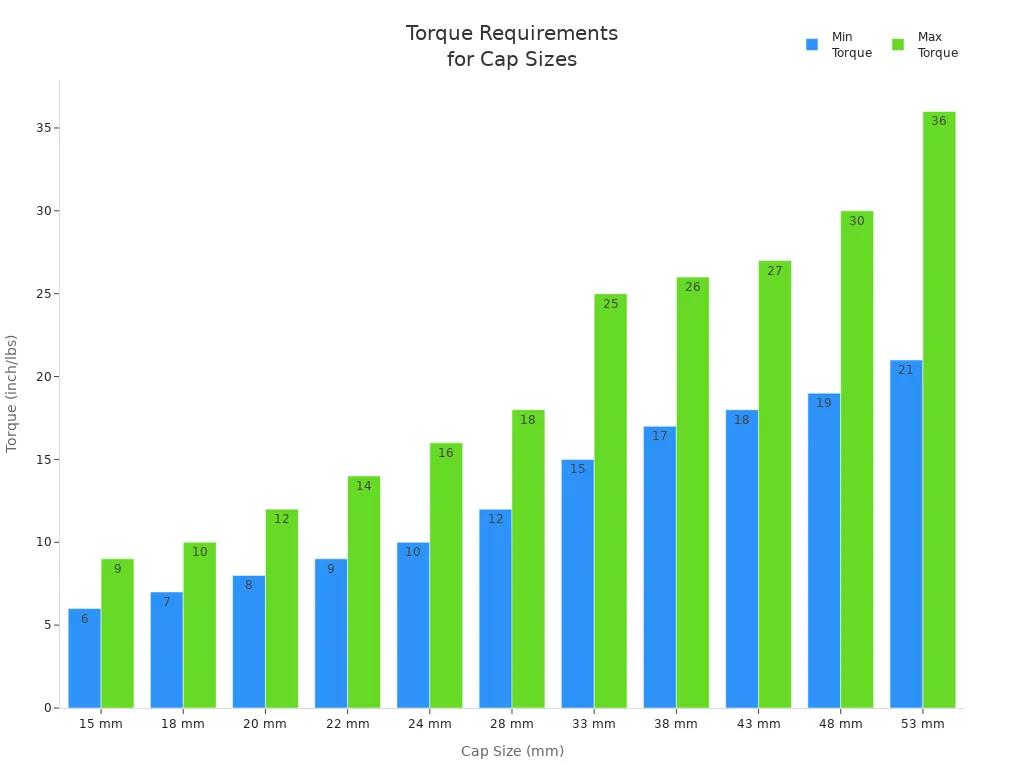
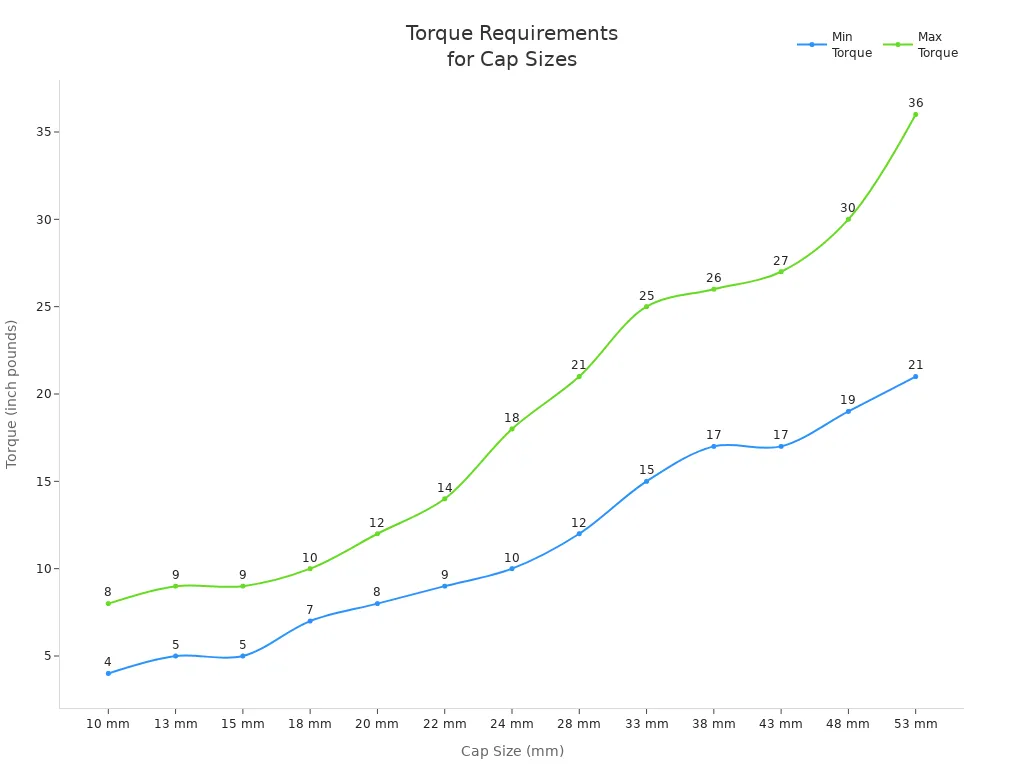
The right torque is needed for good seals. For example, a 38mm cap needs about 18 inch-lbs of torque. To open it, you need about 9 inch-lbs. Using the same torque each time keeps bottles sealed and stops leaks.
Labeling machines put important information on bottles. Labels can go on the front, back, or all around. Putting labels in the right spot is important for rules and speed. Machines check if every bottle has a label in the right place. They also check batch codes and expiration dates. If a label is missing or hard to read, the machine finds the problem. The bottle is then taken off the line.
Feature | Description |
|---|---|
Presence and Placement Verification | Checks if labels are present and properly aligned |
Data Accuracy Checks | Validates batch codes and expiration dates |
Defect Detection | Finds blurred, missing, or distorted text |
Labeling machines use paper, film, or clear labels. They work with bottles of many shapes and sizes. This helps the line move quickly. Automatic machines can label hundreds of bottles each minute.
Inspection systems help labeling machines work better. Cameras and sensors check labels and seals. A PC controls the cameras and lights. There is a touch screen for easy use. The software runs on Windows 10 and uses special programs to manage everything.
Component | Description |
|---|---|
Hardware | PC for camera and light control, touch screen or machine HMI integration |
Software | Windows 10, SEA Vision software for control and integration |
Inspection systems check bottles, vials, and ampoules. They look for labels, color, and good seals. Advanced controls help manage the process and connect with vision systems. This helps keep things running well and makes sure every bottle meets strict rules.
Tip: Using automatic capping and labeling machines with inspection helps companies work faster and make better products.
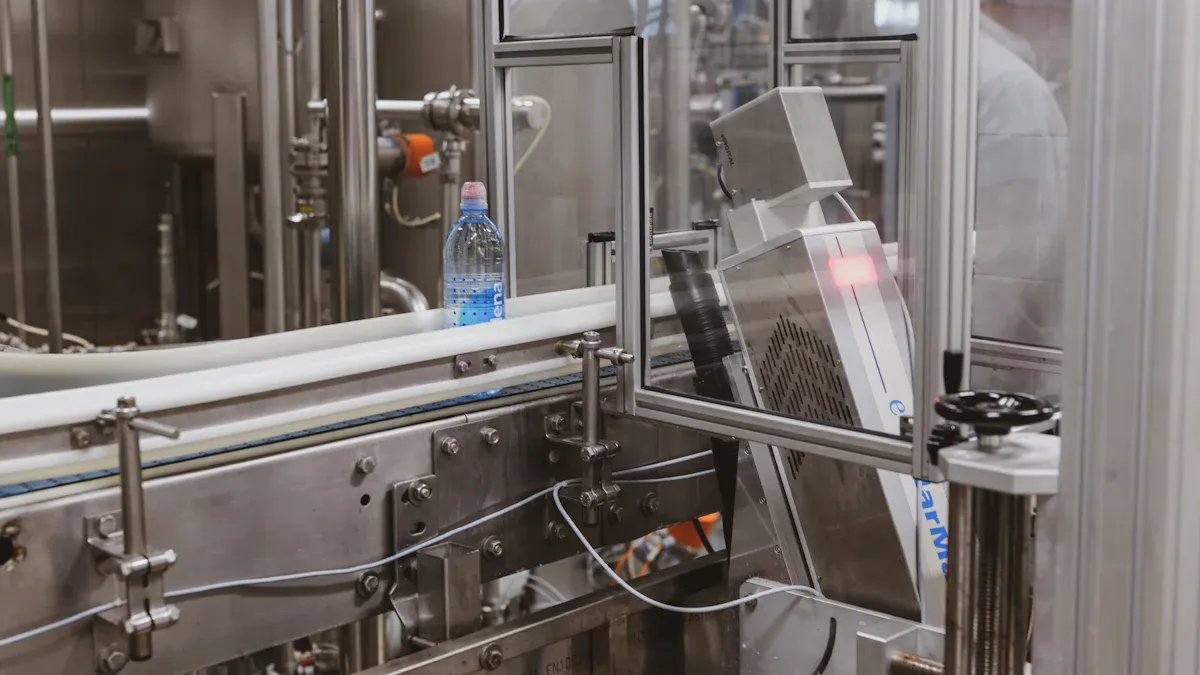
A conveyor system moves each bottle through every step of the production line. The conveyor uses stainless steel or food-grade plastic. These materials keep the bottle clean and safe. The conveyor must hold each bottle steady as it travels. If a bottle tips, the production line can stop. The conveyor belt has guides to keep each bottle in place. Some lines use side rails to help the bottle move straight. The conveyor speed can change to match the speed of the filling, capping, and labeling machines. Operators can set the speed for each bottle size. A slow speed helps with small bottles. A fast speed works for large production runs. The conveyor must keep every bottle moving at the same pace. This keeps the production line smooth and stops bottle jams.
A synchronized conveyor system helps every bottle reach the next machine at the right time. Sensors watch the bottle as it moves. If a bottle gets stuck, the system stops. This protects the bottle and the machines. A good conveyor system helps the production line run longer without problems. It also helps workers find and fix bottle jams quickly.
Tip: A well-built conveyor keeps every bottle safe and helps the production line work faster.
Oral liquid filling lines need the right air supply and power to work well. The air supply helps move the bottle, clean the bottle, and power some machines. Clean, dry air keeps the bottle free from dust. The air pressure must stay steady for every bottle. If the air stops, the production line can slow down or stop.
Power is also important for every part of the production line. The machines use electric motors to move the bottle and run the conveyor. The table below shows common power specs for oral liquid filling lines:
Power Supply | Voltage: 220V; Frequency: 50Hz |
|---|---|
Motor | Model: 5GN50KG; Power: 0.5 kW |
Each machine needs the right power to keep the bottle moving. If the power drops, the production line can stop. Operators check the power and air supply every day. This keeps the bottle safe and the production line running. Good power and air supply help every bottle reach the end of the production line without problems.
Note: Reliable air and power keep the bottle moving and help the production line meet safety rules.
Picking the right oral liquid filling machine takes careful thought. You need to look at each part of the machine. Some important things are accurate dosing, strong capping, clear labeling, and good inspection. When you look at different machines, remember these tips:
Make sure the machine fills bottles with the right amount.
Check if it works in a cleanroom to stop germs.
Pick a machine that matches how fast you need to work.
Make sure it follows GMP and FDA rules.
Match the machine’s features with your company’s needs and the rules you must follow. The table below shows some key points:
Aspect | Description |
|---|---|
Production Line Overview | Has parts that work together for fast and accurate filling. |
Compliance with Standards | Follows GMP and other rules for safety and cleanliness. |
Application Case | Helps make medicine faster and better in factories. |
A good oral liquid filling line helps make medicine that is safe, works well, and follows the rules.
GMP means Good Manufacturing Practice. These are rules for making medicine safely. Every oral liquid filling line must follow these rules. This keeps medicine clean and safe for people.
Filling accuracy makes sure each bottle has the right amount. This keeps people from getting too much or too little medicine. GMP says bottles must be filled very carefully to keep everyone safe.
Companies use special cleaning systems to keep things clean. They wash bottles, machine parts, and other equipment often. This stops germs and helps keep the medicine safe for everyone.
Yes, many oral liquid filling lines can change for new bottles. Operators adjust settings or swap out parts for different sizes. This helps companies follow GMP and make many kinds of medicine.
If a bottle does not pass inspection, the system takes it away. This follows GMP and makes sure only safe bottles go to patients.