Views: 0 Author: Site Editor Publish Time: 2025-12-19 Origin: Site
Type of Drug | Risk of Tissue Damage |
|---|---|
Vesicant | Can cause very bad and lasting injuries. This includes tissue death and changes to how skin looks if the drug leaks out. |
Irritant | Can cause pain and swelling but is not as bad as vesicants. It can make sores in soft tissue if a lot leaks out. |
Non-vesicant | Hardly ever causes quick reactions or tissue death if it leaks out. |
You can make better choices when you know the risks and benefits of vesicant chemotherapy drugs.
Vesicant chemotherapy drugs are strong medicines. They can hurt tissue if they leak. It is important to know their risks for safe care.
Pick big, healthy veins for injections. This lowers the chance of extravasation. Nurses with training should give these drugs to keep you safe.
Watch for early signs of extravasation. These include pain, swelling, or redness at the spot. Tell your care team right away if you notice changes.
Learn about the vesicant drugs you get. Knowing their effects helps you stay aware and ready during treatment.
Use safe ways to store and handle vesicant drugs. Good steps keep patients and healthcare workers safe from harm.
You might wonder what makes vesicant chemotherapy drugs different from other medicines. These drugs are strong and fight cancer cells hard. If they leak out of your vein, they can hurt your skin and tissues a lot. Doctors call them "vesicants" because they can make blisters or even kill tissue if not used safely.
Here is a table to help you see the main features of vesicants and irritants:
Feature | Vesicants | Irritants |
|---|---|---|
Definition | Agents that cause blistering, tissue sloughing, or necrosis when escaping from the vascular pathway. | Agents that produce pain or discomfort in the internal lumen of the vein. |
Damage Location | Causes damage in subcutaneous tissue outside of the vein. | Causes damage inside the wall of the vein. |
Healing | May heal over time without permanent destruction; necrosis requires surgical intervention. | Inflammation can lead to severe edema without fluid leakage. |
Vesicant chemotherapy drugs can keep hurting tissues for days or weeks if they leak. This is why nurses and doctors watch you closely during treatment.
Not all chemotherapy drugs work the same way. Some only cause mild pain or redness if they leak. Vesicant chemotherapy drugs can cause much worse problems. They can make your skin red, form blisters, or even destroy muscle and fat under your skin.
Look at this table to see how vesicants and non-vesicants are different:
Type of Drug | Mechanism of Action | Side Effects |
|---|---|---|
Vesicants | Cause severe local tissue damage upon extravasation | Can lead to redness, blistering, and severe skin damage; symptoms may be delayed for 6-12 hours. |
Non-vesicants | Typically cause less severe reactions | Limited irritation such as tenderness, warmth, or redness at the injection site. |
Vesicant chemotherapy drugs need special care. Nurses use bigger veins or special ports to give you these drugs. This helps lower the chance of leaks and keeps you safer.
You may ask why doctors use vesicant chemotherapy drugs if they are risky. The reason is these drugs are very good at killing cancer cells. They can treat many cancers like breast, lung, and blood cancers.
Some chemotherapy drugs, like oxaliplatin, have fewer side effects on the kidneys, ears, and liver than older drugs. Some of these drugs are non-vesicant and can go through a regular vein. But even one dose of a vesicant drug can cause bad muscle and tissue damage if it leaks. This shows why careful handling is so important.
Doctors pick vesicant chemotherapy drugs because they work well and can help you get better. They watch you closely and use safe ways to lower the risks. You should always ask your care team if you have questions about your treatment.
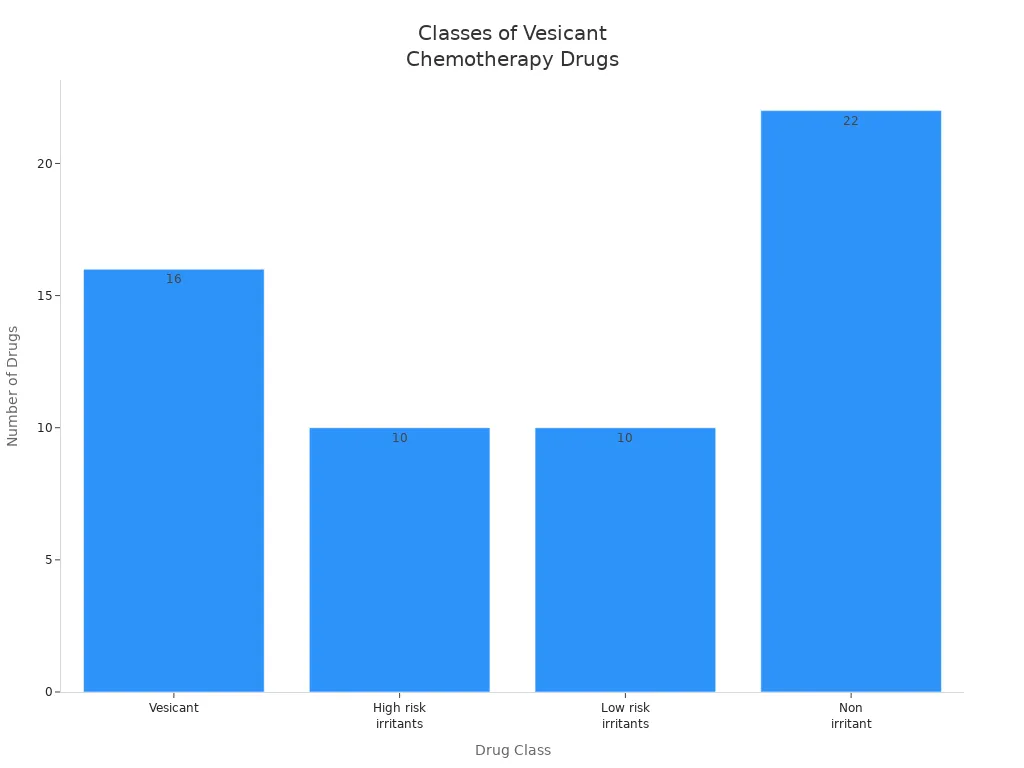
Vesicant chemotherapy drugs are put into different groups. Each group fights cancer in its own way. Doctors sort these drugs by how they work and how risky they are for your tissues. Here is a table that lists the main groups and some examples:
Class | Examples |
|---|---|
Vesicant | amsacrine, carmustine, dactinomycin, daunorubicin, doxorubicin, epirubicin, idarubicin, mitomycin, mitoxantrone, paclitaxel, trabectedin, vinblastine, vincristine, vincristine liposomal, vindesine, vinflunine, vinorelbine |
High risk irritants | bendamustine, busulfan, cisplatin, dacarbazine, dexrazoxane, docetaxel, melphalan, oxaliplatin, paclitaxel albumin-bound, streptozocin |
Low risk irritants | arsenic trioxide, cabazitaxel, carboplatin, etoposide, etoposide phosphate, fluorouracil, gemcitabine, irinotecan, irinotecan liposomal, topotecan |
Non irritant | aflibercept, aldesleukine, asparaginase, azacitidine, bleomycin, bortezomib, carfilzomib, cladribine, clofarabine, cyclophosphamide, crisantaspase, eribulin, fludarabine, gemtuzumab ozogamicin, inotuzumab ozogamicin, methotrexate, monoclonal antibodies (non-conjugated), nelarabine, pegasparaginase, pemetrexed, pentostatin, raltitrexed, temsirolimus, thiotepa |
There are many vesicant drugs in this list. Doctors are very careful with these drugs. They can hurt your tissues if not used the right way.
You may want to know which vesicant drugs doctors use most. Doxorubicin is a drug doctors use a lot for cancer. It helps treat breast cancer, ovarian cancer, leukemia, and lymphomas. This drug works well, but it can hurt your tissues if it leaks out of your vein. Nurses watch you closely when you get doxorubicin to keep you safe.
Other common vesicant drugs are vincristine, paclitaxel, and mitomycin. Each one fights cancer in its own way. Your doctor will pick the best drug for your cancer. They will also check on you during your treatment.
Tip: Always talk to your care team about your drugs. Knowing the risks and benefits helps you stay safe and informed during treatment.
Now you know there are many types and groups of vesicant chemotherapy drugs. This helps you see why doctors are extra careful when you get these drugs.
Vesicant chemotherapy drugs come in a few main packages. Most are in glass vials. Glass vials keep out air and water. Some drugs are in glass ampoules. Ampoules are small and hold one dose. Sometimes, nurses use prefilled syringes. Prefilled syringes help nurses give the right dose fast. Each package keeps the drug safe and gives you the right amount.
Closures on drug containers keep medicine safe and stop leaks. Most vials have rubber stoppers. Rubber stoppers seal tight and do not mix with the drug. Aluminum crimp seals go over the rubber stopper. The metal band holds the stopper and shows if the vial was opened. Some closures have vents for safe drug transfer. These closures keep the drug clean and stop spills. You can trust these closures to protect you and the medicine.
You must store vesicant chemotherapy drugs with care. Here are some storage tips:
Keep these drugs away from other medicines to prevent mistakes.
Store them in a place with good air flow to avoid fumes.
Use bins with high fronts and shelves with guards to stop bottles from falling.
Make sure storage containers are safe in case of accidents.
Always wear gloves that block chemotherapy drugs when handling them.
Staff should get special training to handle and store these drugs.
Label all containers clearly with warnings and drug names. Labels must show the drug schedule and have easy-to-see symbols.
These steps help keep everyone safe and make sure the drugs work well.
You can lower the risk of tissue damage by using the right injection methods. Always ask for a trained nurse or doctor to give you vesicant chemotherapy drugs. They know how to pick the best vein. Large veins in your arm, like the basilic or cephalic, work best. Avoid veins in your hand or near your joints. These spots have a higher chance of leaks.
Before starting, your nurse will check for blood return. This step makes sure the needle sits in the vein. During the infusion, your nurse will keep the fluids running and check the site often. If you feel pain, burning, or see swelling, tell your nurse right away. Staff should always have supplies ready in case of a leak.
Here are some top strategies for safe injection:
Strategy | Description |
|---|---|
Qualified Personnel | Only trained staff should give these drugs. |
Central Venous Catheters | Use these for long treatments or repeated doses. |
Blood Return Check | Make sure blood flows back before and during infusion. |
Free Flowing IV Fluids | Keep fluids moving to lower the risk of leaks. |
Extravasation Supplies | Have emergency kits ready at all times. |
Tip: You should always report any changes in your skin, such as color, temperature, or pain, during treatment.
You play a big role in staying safe during treatment. Nurses and doctors will watch your infusion closely. They check the line and the site for leaks or swelling. Staff will stay with you for short infusions and check on you often for longer ones.
You should learn what signs to look for. If you notice pain, burning, or swelling, speak up right away. Your care team will give you a checklist of things to watch for at home. They will also talk with you about possible side effects and what to do if they happen.
Here is a table showing how your care team keeps you safe and how you can help:
Monitoring Protocols | Patient Education Strategies |
|---|---|
Staff present for bolus infusions and regular checks for others | Report pain, burning, or swelling right away |
Check line patency and blood return often | Use a written checklist for important points |
Watch for signs of extravasation or leakage | Learn about side effects and how to manage them |
Stop infusion and inspect site if a leak is suspected | Know self-care steps and when to seek urgent help |
You can ask your nurse about training programs they have completed. Many take special courses, such as "Administration of Chemotherapy and Safety" or "Safe Handling of Hazardous Medications," to keep you safe.
You need to know that vesicant chemotherapy drugs can cause serious problems if they leak out of your vein. This leak is called extravasation. When extravasation happens, the drug leaves the blood vessel and enters the surrounding tissue. You may feel pain, burning, or swelling at the injection site. Sometimes, your skin turns red or forms blisters. In severe cases, the tissue can die, and you may need surgery to fix the damage.
Doctors and nurses watch for signs of extravasation during your treatment. They check your skin and ask how you feel. If you notice any changes, you should tell your care team right away. Quick action can help prevent worse injuries.
Here are some facts about extravasation and tissue damage:
The chance of extravasation with chemotherapy drugs ranges from 0.01% to 6%.
Vesicant drugs can cause blisters, ulcers, and tissue death.
You may see symptoms hours after the drug leaks.
Nurses use special techniques to lower your risk.
Note: Always pay attention to your skin during treatment. Early signs like pain or swelling can help you avoid serious problems.
You might wonder what happens if tissue damage is not treated quickly. Long-term complications can affect your health and daily life. Some people develop scars where the drug leaked. Others may lose feeling in the area or have trouble moving their arm or hand. In rare cases, tissue damage can lead to infections or slow healing.
Here is a table that shows possible long-term complications and how they may affect you:
Complication | How It May Affect You |
|---|---|
Scarring | Changes how your skin looks |
Nerve damage | Causes numbness or tingling |
Loss of function | Makes it hard to move your limb |
Chronic pain | Lasts for months or longer |
Infection | Needs extra treatment |
Delayed healing | Wounds take longer to get better |
You can lower your risk by reporting symptoms early and following your care team's advice. Doctors and nurses use safe practices to protect you. They choose the best veins and watch your infusion closely. You play an important role in your own safety.
Tip: Ask your nurse about ways to care for your skin after treatment. Good care can help you heal faster and avoid problems.
Vesicant Chemotherapy Drugs are powerful tools in cancer treatment. You must stay alert and informed to avoid risks and complications.
You should look for early signs when you get vesicant chemotherapy drugs. These signs help you find problems before they get worse. You might feel pain, burning, or stinging at the injection spot. Sometimes your skin gets red or starts to swell. You may see fluid coming out or feel tingling. Nurses check if your IV line slows down or stops. If you notice any of these changes, tell your nurse right away.
Here is a table showing common signs and symptoms:
Symptom/Sign | Description |
|---|---|
Tenderness | Pain or sensitivity at the injection site |
Swelling | Area around the site gets bigger |
Taut skin | Skin looks stretched and firm |
Induration | Tissue feels hard around the site |
Blanching | Skin turns pale |
Erythema | Redness around the site |
Blisters | Fluid-filled sacs form on the skin |
Weeping | Fluid oozes from the site |
Necrosis | Tissue death near the injection site |
Absent blood return | No blood comes back when checking the IV line |
Infusion not flowing | IV fluid slows or stops |
If you think extravasation is happening, act quickly. Nurses stop the medicine right away. They keep the IV tube in your arm and try to pull out any drug left. Your nurse might give you an antidote if you need it. Lifting your arm helps with swelling. Nurses may use hot or cold packs, depending on the drug. They write down what happened, the time, the drug name, and what they did.
Immediate steps include:
Stop the infusion right away.
Keep the IV tube in your arm.
Try to pull out the drug.
Give an antidote if needed.
Raise the arm that got the drug.
Use hot or cold packs as told.
Write down everything that happened.
Tip: Always tell your nurse if you have pain, swelling, or changes at your injection spot. Fast action can stop serious injury.
You have choices if extravasation happens. Nurses use special antidotes for different drugs. Sodium thiosulfate helps with mechlorethamine. Hyaluronidase works for plant alkaloids like vincristine and vinorelbine. Dexrazoxane treats anthracycline leaks. Nurses may also use warm packs for some drugs. These treatments help stop tissue damage and help you heal faster.
Vesicant Type | Antidote/Treatment | Notes |
|---|---|---|
Mechlorethamine | Sodium thiosulfate | Use for this type of extravasation |
Plant Alkaloids | Hyaluronidase, Warm compress | Apply compress every 6 hours for 48 hours |
Anthracyclines | Dexrazoxane (Totect/Savene) | Proven for anthracycline extravasation |
Note: Your nurse will pick the right treatment based on the drug and your symptoms. Getting care early helps you heal and lowers the chance of long-term problems.
You can stay safer by using the right injection steps. Nurses pick big, healthy veins for vesicant chemotherapy drugs. They do not use veins in your hand or near your joints. If you need many treatments, you might get a central venous catheter. This device puts medicine into a large vein in your chest. Nurses check for blood return before and during your infusion. This check makes sure the needle is still in the vein.
Nurses use special tools to see how easy it is to find your veins. They get extra training and certificates to give vesicant drugs. Their skills and care help keep you safe. Nurses watch your IV site all the time. They look for redness, swelling, or pain. If you feel burning or any pain, tell your nurse right away.
Here is a table that shows the main steps for safe injection:
Step | Purpose |
|---|---|
Choose large veins | Lower the chance of leaks |
Use central venous catheter | Give steady access |
Check blood return often | Make sure needle is in place |
Monitor IV site | Spot problems early |
Use trained nurses | Keep you safe |
Tip: You should ask your nurse about their training and if they have given chemotherapy before.
You help keep yourself safe during treatment. Learn how irritants and vesicants are different. Ask your care team what kind of drug you are getting. Watch for signs like burning, pain, redness, or swelling. Tell your nurse right away if you notice these signs.
Your nurse will give you a checklist to help you remember what to watch for. Staff check for blood return and look at your IV site many times during your infusion. They stay with you for short treatments and check on you often for longer ones.
Here are some important things you should know:
Know the risks of vesicant drugs.
Ask what type of chemotherapy you are getting.
Learn the signs of extravasation.
Think about getting a central venous catheter if you need many treatments.
Note: Telling your nurse about symptoms quickly can stop serious problems. Stay alert and speak up if you see changes.
When you learn about vesicant chemotherapy drugs, you help your own cancer care. These medicines can help a lot, but they can also be risky if not used safely. You need to follow the newest rules for giving and storing these drugs. Nurses and pharmacists change their rules and use treatments that the FDA says are safe. Groups for cancer doctors give out helpful tips and guides. Some new safe ways include using cold or warm packs and sending high-risk patients to a surgeon. Keep learning and talk with your care team often.
A vesicant drug can hurt your tissues a lot if it leaks. You might get blisters, sores, or even lose some skin. Nurses are very careful when they give these drugs.
You could feel pain, burning, or swelling where the needle is. Your skin might get red or blisters may show up. Always tell your nurse if you see these signs.
Pick big, healthy veins for the medicine.
Use central venous catheters if you need many treatments.
Check for blood return before and during the medicine.
Tell your nurse right away if you feel pain or swelling.
Drug Name | Cancer Type Treated |
|---|---|
Doxorubicin | Breast, ovarian, lymphoma |
Vincristine | Leukemia, lymphoma |
Paclitaxel | Lung, breast |
Mitomycin | Bladder, stomach |