Views: 0 Author: Site Editor Publish Time: 2026-04-17 Origin: Site
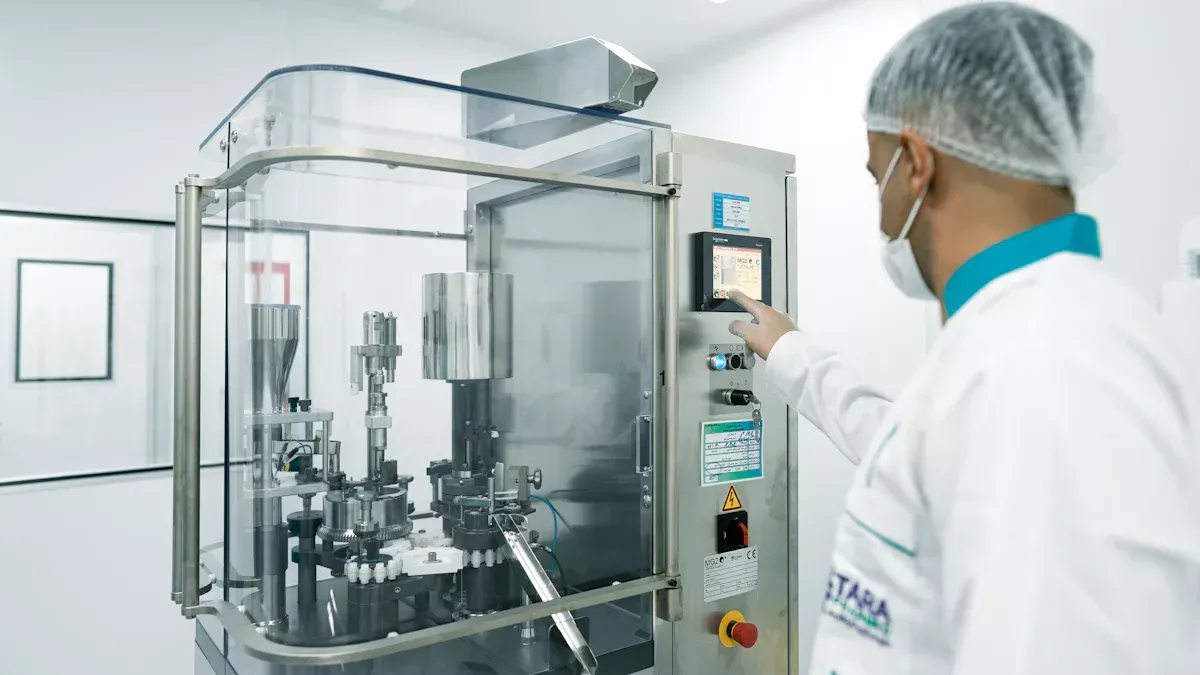
Modern prefilled syringe filling lines keep medicine safe. They use strict aseptic conditions and machines to do the work. Cleanrooms are very important to stop contamination. Different grades of cleanrooms give different levels of control for filling. Fine nozzle filling technology helps put in the right amount of medicine. This reduces waste and makes sure each syringe is filled right. Real-time monitoring systems watch the process as it happens. Automated inspections find problems early. This makes each syringe safer and better. Proper labeling and serialization help track each syringe. This makes sure rules are followed and stops fake products.
You need a cleanroom to keep prefilled syringes safe. Cleanrooms use special filters to stop dust and germs. There are different cleanroom grades with their own rules. Grade A is the most important for filling glass syringes. It matches ISO Class 5. This area uses smooth air flow and is always checked. Grade B helps Grade A and also has strong filters. Grade C and D are not as strict but still matter for washing and preparing.
Cleanroom Grade | ISO Equivalent | Used For | Air Conditions | Particle Limits (At Rest) | Special Points |
|---|---|---|---|---|---|
Grade A | ISO Class 5 | Aseptic filling operations | Laminar Air Flow (LAF) | ≤ 3,520 particles ≥0.5 µm / m³ | Most critical area, continuous monitoring required |
Grade B | ISO Class 5 (At Rest) | Background area supporting Grade A | HEPA filtration | Same as Grade A | Personnel fully gowned, supports Grade A operations |
Grade C | ISO Class 7 (At Rest) | Solution preparation | HEPA filtration | ≤ 352,000 particles ≥0.5 µm / m³ | Moderate control area |
Grade D | ISO Class 8 | Initial washing of components | Basic environmental control | ≤ 3,520,000 particles ≥0.5 µm / m³ | Less stringent than Grade C, requires GMP cleaning procedures |
Every part that touches medicine must be sterilized. Steam is best for things that can take heat. Ethylene oxide is used for items that cannot get hot, but it might move the stopper. Gamma radiation works for many things, but it can change some drugs.
Sterilization Method | Advantages | Limitations |
|---|---|---|
Steam | Primary method for heat-stable products | Not suitable for sensitive biologics due to high temperature and pressure |
Ethylene Oxide (EO) | Lower temperatures than steam | Can adversely affect temperature-labile products and cause stopper movement |
Gamma Radiation | Good material compatibility, no long aeration times | Can produce toxic free radicals in aqueous solutions, affecting drug activity |
You get each syringe ready based on what it is made of. Glass syringes need to be washed and heated before filling. Sometimes, you use vapor hydrogen peroxide to clean them. You may also clean glass syringes by hand. These syringes are filled in a Grade B area with air or nitrogen.
Polymer syringes come in double bags. You do not wash them before filling. You clean the outside of the tub and bring it into the cleanroom. You fill polymer syringes in a Grade B or C area.
Aspect | Glass Syringes | Polymer Syringes |
|---|---|---|
Initial Processing | Requires washing and depyrogenation | No further processing needed before fill line |
Disinfection | Manual decontamination may be required | Placed in nested, double-bagged tubs for disinfection |
Environment for Filling | Class II/Grade B classified area | Grade B/C environment |
Filling Atmosphere | Often performed in air or nitrogen atmosphere | Not specified |
Sterilization Method | Sanitized with vapor hydrogen peroxide (VHP) | Not specified |
You set up the filling line to keep everything sterile. You follow Good Manufacturing Practice rules to keep the area clean. The machines are closed off and very exact. Restricted Access Barrier Systems and air monitors help keep the air safe. Sometimes, UV-C light is used to clean surfaces. These steps make sure every glass syringe is safe and filled right.
Tip: Always check the filling area stays within ±1% for fill volume. This makes sure every dose is safe and works well.
You check every step to make sure syringes are high quality. This setup helps you give safe medicine every time.
Fine nozzle filling technology helps each prefilled syringe get the right amount. The nozzles are very small. This lets you control the liquid carefully. You can fill thick or thin medicine without bubbles. There are no spills. The system works quickly and keeps things clean. No one touches the syringe during filling. Machines do all the work. This lowers the chance of germs. High-precision dosing means almost no mistakes. This technology keeps every dose safe and works well.
Tip: Fine nozzles help you use only what you need. You do not waste medicine in each prefilled syringe.
You fill many prefilled syringes at the same time. This is called batch processing. You track each batch to make sure it meets the rules. Special tools and checks watch the process. Here are some things you check during batch processing:
Monitoring Parameter | Description |
|---|---|
In-process controls | You check fill volume and look at syringes during the process. |
Batch record review | You look at records to make sure rules are followed. |
Trend analysis | You look for changes in quality over time. |
Statistical process control | You use math tools to watch the process. |
Environmental monitoring | You check for germs in the cleanroom. |
Quality control | You watch important things to keep syringes safe. |
You check the fill amount, look for leaks, and watch for changes. You also check the cleanroom to keep out germs. Computers collect data and find problems early. This helps you fix things before the whole batch is affected.
You must make sure each prefilled syringe has the right amount. Fill volume accuracy keeps patients safe. The system uses sensors and scales to check every syringe. If a syringe is wrong, the system removes it. Cameras look for bubbles or missing liquid.
You keep records for every batch. This shows your filling lines work well and follow the rules. You use trend analysis and math tools to find small changes. If you see a problem, you can stop and fix it fast.
Note: Automation makes the job easier, but it costs a lot at first. Small companies may have trouble paying for these systems. You also need to pay for repairs and training.
These steps help you get safe, correct, and high-quality prefilled syringes every time.
You need strong quality checks at every step. Modern filling lines use smart tools to find problems early. These tools help keep each dose safe for people. You can trust these systems to check and record everything.
You watch the process with sensors and computer programs. These tools track pressure, shock, tilt, and force on syringes. If something is wrong, you see it right away. This helps you fix problems before they reach people.
Feature | Description |
|---|---|
Monitor Pressure | Checks pressure on syringes to stop leaks or cracks. |
Detect Shock Events | Finds bumps that could break glass or move plungers. |
Track Syringe Spin | Measures how fast and how much syringes turn. |
Capture Tilt Events | Spots tilting that can cause jams or filling mistakes. |
Measure Flange Force | Watches for too much force on syringe flanges. |
Optimize Handling | Changes robots and grippers to be gentle. |
Seal and Plunger | Sees force changes that could move stoppers. |
Root Cause Analysis | Helps you find and fix problems quickly. |
You use machines to look for defects in every prefilled syringe. Cameras, robots, and smart programs do this job. These systems find particles, bubbles, or cracks better than people. They work fast and do not get tired. You can trust them to catch even tiny problems.
Machines help lower mistakes made by people.
Cameras and robots check each syringe closely.
In-line inspection finds problems like stopper tilt or sealing bubbles.
These systems must be as good as trained workers.
Tip: In-line inspection helps keep every prefilled syringe safe for patients.
You must keep records for every step. Data logging systems save details from inspection, filling, and packing. You can show proof that your filling lines follow all rules. This helps you pass checks and follow laws. You also use these records to find trends and make things better.
Stage | Quality Control Integration |
|---|---|
Pre-stopped plastic syringes | First checks before filling |
Vibratory bowl feeding | Checks if syringes are facing the right way |
Robotic arm rotation | Makes sure handling is clean |
Head-up positioning | Lines up syringes for filling |
Servo pump filling | Keeps things clean with nitrogen flushing |
Vision inspection | In-line check with over 99.5% defect finding |
Dynamic capping | Checks if seals are tight |
Pressure decay test | Makes sure seals do not leak |
Qualified output | Last in-line check for perfect syringes |
You use leak tests and smart vision checks to make sure every prefilled syringe is perfect. These steps help you give safe medicine every time.
Automated stoppering seals each filled syringe fast and safely. Machines put stoppers on syringes without people touching them. This keeps things clean and lowers the chance of germs. Sensors check if every stopper is in the right spot. If a stopper is missing or not straight, the system takes out that syringe. Automated stoppering helps you make lots of syringes quickly. It also makes sure every dose stays sterile.
Tip: Always look at the stopper to make sure it is in place. A good seal keeps the medicine safe inside the syringe.
You need to put labels on each syringe so you know what is inside. Automated labelers print clear words on every syringe. The label shows the drug name, batch number, and when it expires. Serialization gives each syringe its own special code. You can follow each syringe from the factory to the patient. This helps stop fake medicine and lets you recall products if needed.
Labeling and serialization steps:
Print labels with the drug and batch info.
Robots put labels on the syringes.
Add a special serial number or barcode.
Scan and save each code for tracking.
You put the labeled syringes into boxes or trays to protect them. Secondary packaging keeps syringes safe when they are shipped or stored. It also helps keep the medicine clean and the needle sterile for a long time. Good packaging can help a syringe last two to three years.
Secondary packaging keeps the liquid medicine good.
It keeps the needle clean and stops germs.
Good packaging and sterilization help the syringe stay safe and work well until it expires.
You must pick packaging that fits the medicine and how it will be stored. This step makes sure patients get safe and high-quality syringes every time.
You need to get your machines ready before each batch. Clean and sterilize all parts that touch the medicine. This includes the container, plunger, and needle. Use a Grade A or ISO 5 cleanroom to keep things sterile. Special filling machines help you control pressure and temperature. Always check the temperature so it stays the same. This stops bubbles or changes in the medicine. Filter and degas the liquid before you fill the syringes. This removes any bad stuff. Clean and check your machines often. This helps stop cross-contamination and keeps your process right.
Tip: Watch for particles and pyrogens in the air. This helps you find problems before they hurt your batch.
You must change your process for different medicines. Some drugs are thick and need more force to fill. You can change the formula or use special tools to make shots easier. For protein drugs with high concentration, test and adjust the glide force. Pick the right excipients to keep the medicine stable. More generic drugs mean you need cheaper ways to change your filling line.
Change silicone oil levels for tough drugs.
Test how thick the drug is and how hard it is to inject.
Pick tools and excipients that fit the drug.
You keep your filling line working well by doing some steps:
Use quality checks to keep standards high.
Watch the process live to catch problems fast.
Clean and disinfect surfaces often to stop germs.
Calibrate your machines on a set schedule.
Look for underfilling or overfilling from clogs or pump issues.
Calibrate machines to follow the rules.
Use live checks to find problems early.
If you see germs, check seals and air filters right away. New rules may mean more tests and checks, which can slow things down. Stay up to date on rules to avoid delays.
Note: Keeping machines ready and changing for new drugs helps you give safe and good syringes every time.
You can see how every step keeps prefilled syringes safe. Each part of the filling line checks for mistakes. This makes sure the medicine is right and works well. New machines and strong quality checks help you trust each dose. Modern containers have special coatings and barcodes. These make it easier to track syringes and keep drugs safe.
New syringe designs help lower risks from silicone and glue.
Easy-to-use systems let people give shots at home.
Companies work hard to meet more demand and help the planet.
New ideas and strict rules will make medicine delivery safer in the future.
You use a prefilled syringe filling line to fill, seal, and inspect syringes in a clean, automated way. This system helps you keep medicine safe and ready for patients.
Cleanrooms help you stop dust and germs from getting into the syringes. You keep the air clean with special filters. This protects the medicine and keeps patients safe.
You use sensors, cameras, and scales to check each syringe. If a syringe has the wrong amount, the system removes it. This keeps every dose accurate.
You can adjust the filling line for different drugs. You change settings, tools, and cleaning steps. This helps you fill many types of syringes safely.
If you find a defect, the system removes the syringe right away. This stops bad syringes from reaching patients and keeps your quality high.