Views: 0 Author: Site Editor Publish Time: 2026-03-23 Origin: Site
You see that more people need vaccines, biologics, and sterile medicines every year. If you pick flexible and adaptable systems, you get ready for the future.
Vial filling sealing lines help keep medicines safe and good. They use machines to fill and seal vials. This lowers mistakes made by people.
Vial filling systems can change quickly for different vial sizes. They also work for many kinds of medicines. This helps meet the need for more types of medicine.
Automation makes work faster and more efficient. It keeps things clean and safe while making more medicine.
Following strict rules is very important for medicine safety. It helps companies pass checks and protects patients and makers.
Buying new vial sealing machines can save money and help the planet. It is good for your business and the environment.
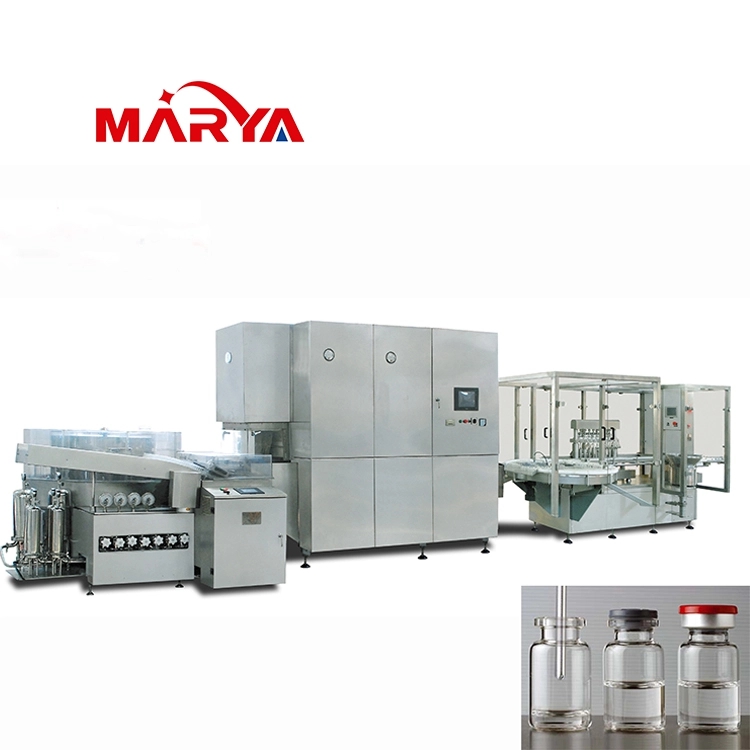
You use a vial filling sealing line to make sure every medicine vial is clean, filled, and sealed the right way. This system brings together many machines and steps to protect the medicine and keep people safe. Each part of the line works together to help you meet strict standards in pharmaceutical manufacturing.
Here is a table that shows you the main steps and what each one does:
Step | Description |
|---|---|
Vial Feeding | You place vials on a conveyor system, either by hand or with machines, to start the process. |
Vial Washing | Machines spray water and air to clean the vials and remove any dirt or dust. |
Sterilization | Vials go through high heat to kill germs and make sure they are safe for medicine. |
Filling | Special nozzles fill each vial with the right amount of medicine, using sensors for accuracy. |
Stoppering | The line puts stoppers on the vials to keep the medicine inside. |
Freeze-Drying | Some vials go through freeze-drying to help the medicine last longer. |
Sealing | The line adds caps to the vials to stop leaks and keep the medicine safe. |
Inspection and Labeling | Machines check for mistakes and add labels so you know what is inside each vial. |
You see that each step is important. You start by cleaning and sterilizing the vials. You fill them with medicine in a clean space. You add stoppers and caps to keep the medicine safe. You finish by checking for problems and labeling each vial.
Automation helps you do all these steps quickly and with fewer mistakes. Machines wash vials with clean water and hot air. Vials move through a tunnel to get sterilized. You fill the vials in a clean room to keep out germs. After filling, you add stoppers and caps in a special area to protect the medicine. You watch the drying and sterilizing steps in real time to make sure everything is safe.
You can choose from different types of vial filling sealing line systems. Some lines are made for large batches. Others are flexible and can handle small batches or different types of medicine. This flexibility is important in pharmaceutical manufacturing because you often need to switch between products quickly.
You see more companies using flexible vial filling line systems. The demand for vaccines, biotechnology products, and new medicines keeps growing. You need machines that can change settings fast and work with many types of vials. The medical field now asks for small batch production. You need systems that can handle this without wasting time or materials.
Tip: If you want to stay ahead in pharmaceutical manufacturing, pick a vial filling sealing line that can adapt to new products and batch sizes. This helps you meet changing needs and keeps your business strong.
You get strategic value from a flexible system. You can make many types of medicine without buying new machines each time. You can also respond faster when new health needs appear. This makes your fill-finish operations ready for the future.
In 2026, fill-finish operations are changing a lot. More people need vaccines, sterile medicines, and biopharmaceuticals. Many countries spend money on new machines and bigger factories. Companies use single-use systems and modular sterile lines more often. These new ways help you work faster and safer.
Here is a table that shows market size and demand for fill-finish operations:
Aspect | Details |
|---|---|
Global and regional estimates in volume and value terms for 2026-2036. | |
Segmentation | Includes dosage form, container type, manufacturing scale, and end use. |
Demand Patterns | Covers contract fill finish services and pricing benchmarks. |
More companies use disposable technologies now. These systems make work flexible and stop cross-contamination. They also help you switch between jobs quickly and save money. The growth comes from biologics, biosimilars, monoclonal antibodies, cell and gene therapies, and vaccines. These products need very clean and careful processing.
Smart manufacturing is important today. You use AI-driven automation, single-use systems, modular sterile lines, and isolator-based filling. These trends lower contamination risks and make things safer.
Here is a chart that shows how demand for fill-finish operations grows in different countries:
The United States, Germany, Japan, China, and South Korea are leaders. They spend more on biologics manufacturing and contract fill-finish services. These places grow fast because of new therapies and vaccines.
You must follow strict rules in fill-finish operations. In 2026, there are new rules and higher standards for medicines. You need to follow FDA 21 CFR Part 11 for electronic records and signatures. You must keep computer-made, time-stamped audit trails for every action. You also need to check that your computer systems work well.
Here is a list of important regulatory changes you must follow:
Follow FDA 21 CFR Part 11 for electronic records and signatures.
Keep audit trails for all operator actions.
Check systems to show they work right.
Use strict access controls for allowed workers.
Follow ALCOA+ rules for data integrity.
Do yearly Product Quality Reviews to find ways to improve.
Recheck systems every 3-5 years or after big changes.
Use formal change control for equipment and software.
Keep checking your process with statistics.
You must also meet international quality standards. You follow US FDA 21 CFR Parts 210 & 211 for Good Manufacturing Practices, WHO GMP rules, and ISO standards. These rules make sure your vials and packaging are safe and high quality.
You need to:
Follow GMP and other rules.
Keep good records and traceability.
Check and qualify equipment and processes.
Make sure vials stay sterile when sealing.
Use care and accuracy in crimping.
Test for leaks and seal strength.
Follow FDA, EMA, WHO, USP, and ICH rules.
You must check and qualify everything before you start vial sealing. You test pressure, temperature, and time to make sure your way works. You do audits all the time to keep up with quality standards. These checks help you give safe medicines to patients.
Note: You keep patients safe by following strict rules and quality standards. You make sure your fill-finish operations are safe and reliable.
There are big improvements in automation and precision in fill-finish operations. Fully automated lines mean less human work. This lowers contamination risk and makes quality better. Robotic arms fill vials with exact amounts, which is important for biopharmaceuticals and vaccines. New machines use laser sensors and vision systems. These tools check fill levels and capping in real time.
Here is a table that shows new technologies and what they do:
Technology | Impact on Fill-Finish Operations |
|---|---|
Robotic Systems | Improve filling volume precision and reduce waste. |
Advanced Sensors | Track real-time parameters and adjust setpoints quickly. |
Single-Use Technologies | Eliminate cleaning tasks and decrease cross-contamination hazards, enhancing financial efficiency. |
AI and Data Analytics | Optimize operations, predict maintenance needs, and enhance overall efficiency. |
Advanced Isolators | Create controlled environments with minimal human contact, improving product sterility and compliance with regulations. |
Modern automation makes things more accurate and reduces mistakes. You use positive displacement pumps and servo-driven filling machines. These machines keep variation below 1%, which meets USP standards for injectable drugs. You cut overfill by 2–5%, so you waste less and have fewer rejected batches. Automation lets you check everything in real time. You can change filling settings automatically to keep quality steady.
The global fill-finish market grows from US$16.85 billion in 2024 to US$28.14 billion by 2030. The pharma robotics market may reach USD 430 million by 2028. You use these new tools to make your pharmaceutical work better, faster, and safer.
Tip: You invest in automation and precision to meet strict quality standards and rules. You keep your fill-finish operations ready for the future.
Modern vial sealing lines help keep medicine and people safe. Automation means machines do more work, so people make fewer mistakes. This lowers the chance of germs getting in by about 30%. Tamper-evident seals show if someone tries to open the vial. Smart tracking systems help you know where each vial goes. Better cleaning methods and real-time checks make sure everything stays safe. Smart labels and tracking make it easy to follow each vial. This also helps stop fake medicine. You must follow strict health rules, so you use new vial sealing technology. Automatic filling keeps things clean and stops mistakes from people. Machines give the right amount of medicine and waste less liquid. You can make thousands of vials every hour. This keeps workers safe and follows GMP rules. Automation means you need fewer people, so there are fewer costly mistakes. Special pumps fill each vial with the right amount. Stoppering keeps germs out after filling. The last step puts on caps to seal the vials and keep them clean.
Automation lowers the risk of germs.
Tamper-evident seals keep medicine safe.
Real-time checks make sure vials are clean.
Smart labels help track each vial.
Better cleaning keeps vial sealing safe.
Modern vial sealing lines help you work faster and better. Robots make fewer mistakes and help you make more vials. You can meet the need for new medicines like biologics and gene therapies. Pre-filled syringes make work easier for hospitals. Scalable vial sealing lines let you make more vials as demand grows. Automation means you work faster, make fewer mistakes, and follow rules better. A fully automatic vial sealing line helps your business grow for years. You get the same good results and clean vials every time. You can make more vials quickly when you need to.
Robots help make more vials.
Scalable lines grow with demand.
Automation makes work faster.
Every batch is clean and safe.
Automatic lines help your business grow.
Modern vial sealing lines help you save money and protect the planet. You can recycle vials and caps made from the same material. This makes sorting and recycling easier and creates less waste. Lighter vials are easier to move and store, so you make less pollution. You follow rules that help the environment and reach your green goals. Using less material and energy saves money. Sustainable vial sealing lines are good for the earth and your budget.
Tip: Pick vial sealing lines that use less energy and can be recycled. This helps both the planet and your business.
When you pick a future-proof vial filling system, you want machines that can keep up with new changes in medicine making. You should get machines that are simple to clean and made from stainless steel. This stops germs and keeps your vials safe. Cleaning-in-place (CIP) systems wash the machines without taking them apart.
You need filling machines that work with many vial sizes and types of medicine. This helps you switch between big vaccine batches and small groups of other medicines. A modular vial filling line lets you add new parts, like freeze-dryers or isolators, when you need them. You can use automatic changeovers without tools to save time and make fewer mistakes.
Here are important features to look for:
A design that works for many vial sizes and medicines
Modular parts for easy upgrades and new tools
Machines that clean and sterilize themselves (CIP/SIP)
Standard connections for quick upgrades
Fast changeovers with little waiting
Help from suppliers for repairs and advice
You should also think about how much it costs over time. Look at how much energy it uses, how often it needs fixing, and how easy it is to get new parts. These choices help your line work well for many years.
You must follow strict rules for keeping things clean and ready for checks. Your line should meet the newest Annex 1 rules and other world standards. Automation and robots help you fill vials very carefully and keep them germ-free. Flexible machines let you use many types and sizes of containers.
You want your line to be good for the planet and use less energy. This helps you reach green goals and save money. Adaptable lines give you value for a long time because you can change fast when the market changes.
Here is a table that shows how being adaptable helps you:
Benefit | Description |
|---|---|
Precision | You fill vials with the right amount for safety. |
Sterility | You keep things very clean to stop germs. |
You follow FDA, EMA, and WHO rules to get approved. | |
Operational Flexibility | You can change vial sizes and medicines fast. |
Quality Control | You check fills and seals to stop recalls. |
Tip: Pick a future-proof vial filling system that can grow with your business and help you face new problems.
You use vial filling sealing lines to keep medicine clean and safe. These machines stop germs from getting into each vial. They help you follow important rules from around the world.
Automation lets you make medicine faster and check quality better.
You spend less money and can switch to new medicines quickly.
If you buy new, automated lines, you will be ready for the future and your work will stay strong in 2026.
You get the power to switch between different vial sizes and medicines. Flexibility lets you meet new market needs fast. You can handle small or large batches. This flexibility helps you follow changing standards and keeps your production strong.
You must follow strict standards to keep medicines safe. Standards guide how you clean, fill, and seal vials. You check every step for quality. These standards protect patients and help you pass audits. You meet global standards for every batch.
Flexibility lets you add new machines or change settings fast. You can make new medicines without buying a new line. This flexibility helps you meet new standards and rules. You stay ready for new products and market changes.
You update your machines and check your process often. You train your team on new standards. You use flexible systems that let you change settings fast. This flexibility helps you meet new standards and keep your line safe.
Yes! Flexibility means you do not need to buy new machines for every new medicine. You use one line for many products. This flexibility helps you meet standards and lower costs. You work faster and waste less.