
Views: 0 Author: Site Editor Publish Time: 2025-10-02 Origin: Site
Prefilled syringes are transforming pharmaceutical manufacturing with their precision and safety. The role of Liquid Filling Machines and Syringe Filling Machines is key to enhancing production efficiency. These machines ensure consistent dosing, reduce errors, and maintain sterility.
In this article, we will explore how these machines revolutionize syringe production and meet the growing demand for high-quality, reliable pharmaceuticals.
Prefilled syringes are pre-sterilized, single-dose containers that are filled with medication, typically used for injectable treatments. They offer a convenient and efficient alternative to traditional vials and syringes.
These syringes are designed for a wide range of medications, including vaccines, biologics, and oncology drugs. They are specifically developed to ensure consistent dosing, reduce the risk of contamination, and improve the overall patient experience.
● Convenience and Accuracy: Prefilled syringes eliminate the need for healthcare providers or patients to measure out doses, ensuring accurate and reliable administration every time.
● Safety for Healthcare Providers and Patients: By reducing the handling of syringes, prefilled syringes minimize the risk of contamination, needle-stick injuries, and dosage errors.
● Extended Shelf Life: Prefilled syringes are sterilized and sealed, increasing their shelf life compared to traditional vials.
The global demand for prefilled syringes has surged in recent years. This trend is driven by the increased use of biologics, personalized medicine, and self-administered injectable therapies. According to market analysis, prefilled syringes are expected to grow at a compound annual growth rate (CAGR) of over 10% in the coming years, especially in markets like oncology, vaccines, and diabetes management.
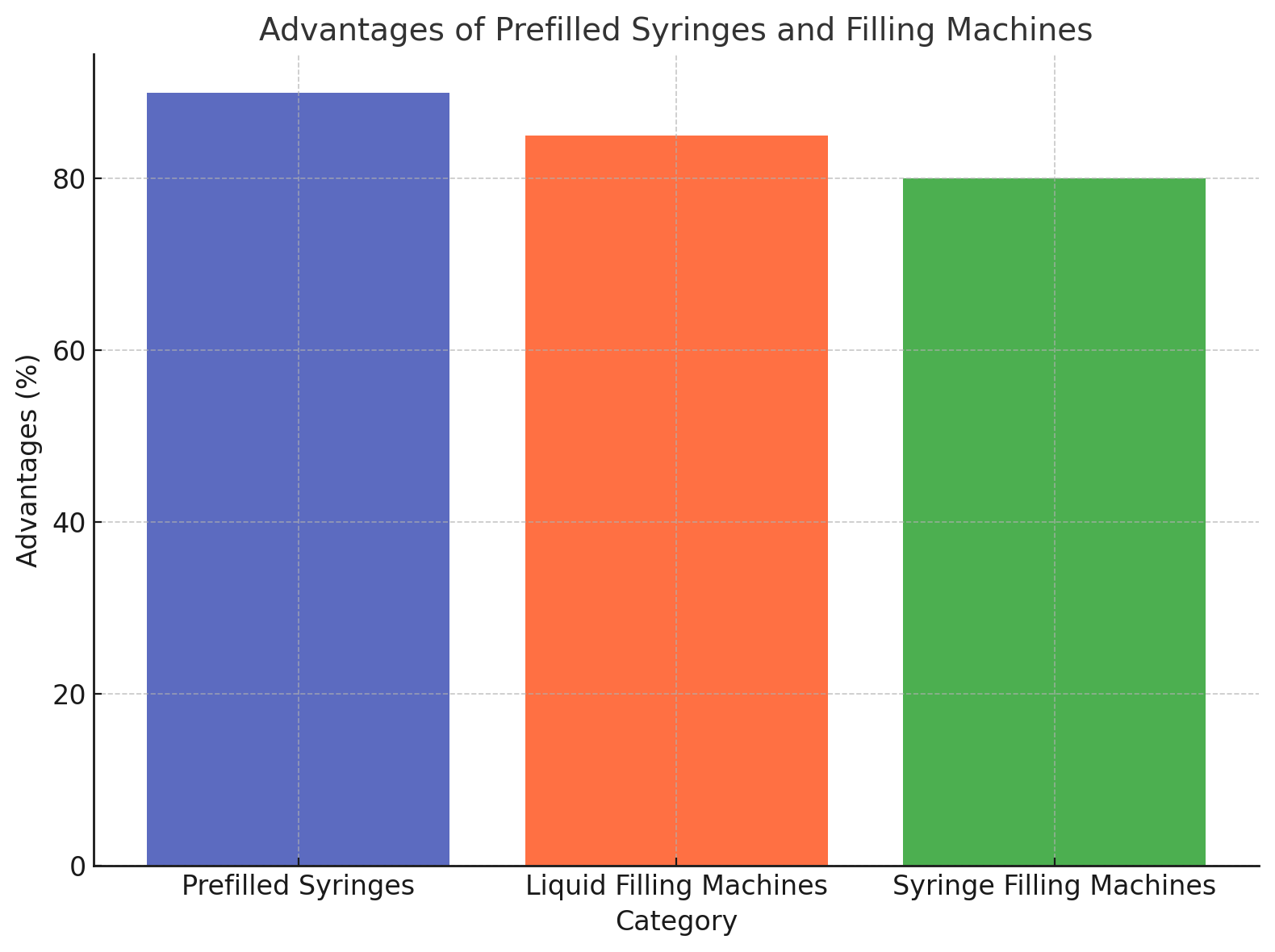
Syringe filling machines automate the process of filling syringes with liquid formulations. These machines typically use advanced metering systems like ceramic pistons or peristaltic pumps to ensure precise volumes are dispensed into each syringe.
In addition, Syringe Filling Machines are designed to handle a variety of syringe types, including those used for vaccines, insulin, and biologic therapies. The machines also ensure that each syringe is filled under controlled, sterile conditions, meeting the high standards set by regulatory bodies.
● Automatic Syringe Filling Machines: These machines can handle high-volume production with minimal manual intervention, ensuring consistent filling speeds and accuracy.
● Semi-Automatic Syringe Filling Machines: Suitable for smaller batch sizes or more specialized drugs, semi-automatic machines offer greater flexibility and are easier to adjust for different syringe sizes and types.
● Ceramic Piston Pumps: Used for accurate and controlled filling, ideal for high-viscosity liquids.
● Peristaltic Pumps: Often used for more sensitive medications like vaccines, where contamination risk must be minimized.
● Through-the-Tip Filling: This method ensures that syringes are filled from the tip rather than the base, reducing the risk of air bubbles and contamination.
The pharmaceutical industry is increasingly relying on Liquid Filling Machines to enhance production efficiency. Automated systems can fill thousands of syringes per hour, significantly reducing labor costs and human error. These machines integrate advanced technologies like robotic arms, AI for predictive maintenance, and real-time quality control to streamline the entire filling process.
Modern Syringe Filling Machines come with features like:
● Real-time Monitoring: Sensors track every step of the filling process, ensuring precision.
● Robotics: Automated robots handle the syringes with great care, reducing human intervention and preventing contamination.
● Smart Integration: These systems are now integrated with AI to predict machine maintenance and adjust production speed based on real-time data.
Prefilled syringes need to accommodate a variety of drugs, from low-viscosity vaccines to high-viscosity biologics. Modern filling machines are highly customizable, enabling pharmaceutical companies to adjust settings for different products. This adaptability ensures that the machines can meet the evolving demands of the industry.
Sterility is paramount in the pharmaceutical industry. Syringe Filling Machines ensure that the entire process, from filling to sealing, is done in sterile environments. Aseptic filling techniques, UV sterilization, and sealed systems are employed to eliminate the risk of contamination.
Compliance with regulatory standards like those set by the FDA and EMA is crucial. These organizations ensure that filling machines and their processes meet strict guidelines for quality and safety. Key regulations to follow include Good Manufacturing Practices (GMP) and validation procedures for machinery.
To ensure that each batch of prefilled syringes meets the required standards, filling machines undergo comprehensive validation processes:
● IQ (Installation Qualification): Verifies that the machine is installed correctly.
● OQ (Operational Qualification): Confirms that the machine performs as expected under normal conditions.
● PQ (Performance Qualification): Ensures the machine meets the set criteria over the course of production.
One of the main challenges of Syringe Filling Machines is maintaining precision at high speeds. As demand increases, it is crucial that machines can fill syringes accurately without sacrificing speed. Advanced technologies, such as ceramic pumps and high-speed automation, have been developed to meet this need.
Contamination is a significant concern in the pharmaceutical industry. Isolators and closed systems are used to minimize exposure to the environment. Sensors can also detect any potential contamination, ensuring that only safe, sterile products reach the patient.
Biopharmaceuticals and other high-viscosity drugs require specialized filling systems. Syringe Filling Machines equipped with piston pumps or peristaltic pumps are ideal for these applications, as they can handle thicker liquids without compromising on filling accuracy.
As more patients self-administer injectable medications at home, the demand for prefilled syringes is expected to increase. This shift will require advancements in Syringe Filling Machines to handle smaller, personalized batch sizes while maintaining accuracy and sterility.
AI and machine learning will play a key role in optimizing Liquid Filling Machines. Predictive maintenance, real-time data analysis, and smart automation will make syringe filling processes more efficient, reducing downtime and improving overall quality control.
The pharmaceutical industry is increasingly focusing on sustainability. Innovations in filling machines are helping reduce waste, improve energy efficiency, and make syringe production more eco-friendly.
In this article, we explored the growing role of Products - Shanghai Marya in the production of prefilled syringes. These machines enhance production efficiency, reduce errors, and ensure precise, sterile dosing.
As the demand for prefilled syringes increases, Marya offers advanced filling solutions that meet industry standards. Their products provide high-speed, accurate, and safe syringe filling, delivering exceptional value to pharmaceutical manufacturers.
A: Prefilled syringes are pre-sterilized, single-dose containers filled with medication, designed for precise, safe injections.
A: Liquid Filling Machines ensure accurate dosing by automating the filling of syringes with liquid medications under sterile conditions.
A: Syringe Filling Machines enhance accuracy, reduce human error, and improve efficiency in the production of prefilled syringes.
A: Liquid Filling Machines guarantee precise filling, ensuring the correct dosage while maintaining sterility and minimizing contamination risks.
A: Syringe Filling Machines help meet industry standards like GMP by ensuring that syringes are filled in a controlled, sterile environment.


